Showing posts with label bosnians. Show all posts

Saturday, January 17, 2009

Walking Tour: Ridgewood

Ridgewood is perhaps a bit out of the way for the average New Yorker, but the effort to get there is well worthwhile. Historically, this is a German neighborhood but today it is as diverse as anywhere else in Queens – and is home to a major Polish enclave (mainly along Fresh Pond Road), and a smattering of former Yugoslavs, among many other groups.

The neighborhood is home to a major historic district, focused on its fantastically preserved early 20th century residential buildings. When the historic district was declared in 1983, it was the largest in the country, with nearly 3000 buildings included. Even beyond the Slavic sites here, the historic architecture makes Ridgewood a nice place to spend an afternoon.

Though there are several transportation options, Slavs of New York came from Manhattan on the L line to Myrtle-Wyckoff Avenue, and walked across Myrtle Avenue (though there is also a connection to the M line that runs straight through Ridgewood).

The Balkan presence is quickly felt on Myrtle Avenue. Walking across, you’ll first hit the Bulgarian grocery Parrot Coffee Grocery (58-22 Myrtle Avenue). Nearby is the Serbian-owned European Music & Video Store (59-13 71st Avenue), then Muncan Meat Market (60-86 Myrtle Avenue).

A bit further down, the deli Balkan Express (64-02 Myrtle Avenue), featuring a Socialist Federative Republic of Yugoslavia flag on its awning has unfortunately closed, though the awning (and the flag) remain for now. From here, it’s a quick walk over to the next neighborhood in Queens, Glendale, home of the Serbian Club (72-65 65th Place).
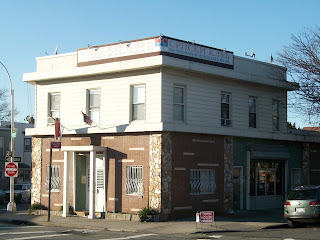


An outpost of the Greenpoint-based Polish & Slavic Federal Credit Union (60-95 Myrtle Avenue) on the corner with Fresh Pond Road is the gateway to a Polish enclave second only to Greenpoint itself. Walking up Fresh Pond Road, you’ll first hit Bona Restaurant (71-24 Fresh Pond Road).

The road has a string of Polish delis, too numerous to list here. They include Teddy's Market Polskie Delikatesy (71-08 Fresh Pond Road), Wawel Meats (68-33 Fresh Pond Road), Pulaski Deli (67-12 Fresh Pond Road) and Okruszek Polish Bakery (67-10 Fresh Pond Road). Just around the corner, down Putnam Road, is a Polish bookstore.
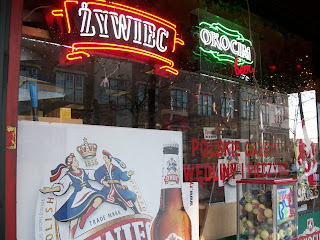


After a couple more delis, including Jantar (66-66 Fresh Pond Road) and Starowiejski (66-51 Fresh Pond Road), there are two excellent Polish restaurants: Kredens (66-36 Fresh Pond Road) and Krolewskie Jadlo (66-21 Fresh Pond Road). Either is a good place for lunch or dinner.

Further up, you’ll find many more Polish delis, as well as Video Random (66-02 Fresh Pond Road) and Aga Book Store (65-18 Fresh Pond Road).

A short walk down Linden Street from Fresh Pond Road will take you to
Gottscheer Hall (657 Fairview Avenue), which is worth poking your head into. The well-preserved deco lobby is impressive, as is the beer-hall on the first floor.


Along with the early German presence came the Gottscheer Germans, a group from what is today Kočevje, in Slovenia. Very few Gottscheer Germans remain in Slovenia because of post-World War II repression of German culture in Yugoslavia, and so their presence in Ridgewood is rather unique. The Gottscheer community here has a number of institutions – most visibly Gotscheer Hall, but also a dance group, a hunting club, a women’s chorus and more.

Down Fairview, the excellent restaurant Bosna Express (7-91 Fairview Avenue) sits next door to the Albanian Café Tirana, a sight possible perhaps only in Queens. Also nearby are even more Polish delis, joined now by a few Balkan ones. Check out Old World Bakery (66-91 Forest Avenue), Europa Grocery (99 Forest Avenue), Korona Deli & Grocery (66-65 Forest Avenue), and Burek's (68-55 Forest Avenue). Also nearby is St. Matthias Roman Catholic Church (58-15 Catalpa Avenue), a German parish that now serves the Polish enclave.

And from here, you will be within striking distance of the Myrtle-Wyckoff Avenue L train.

Thursday, November 27, 2008

Slavs at the 1939 World's Fair in Queens

The other week, Slavs of New York was lucky enough to join the Municipal Arts Society’s walking tour of Bohemian National and the Sokol Halls, led by Joe Svehlak. Everyone is encouraged to visit Bohemian National Hall, but Sokol Hall is a bit less of a public space so getting inside was a treat.

Just inside the door is a small pub, and among the decorations are five large medallions – one each for Bohemia, Moravia, Silesia, Slovakia and Subcarpathian Rus (Ruthenia), the five parts of Czechoslovakia from 1918 to 1939. The guide said they were originally from the Czechoslovak pavilion from the 1939-1940 World’s Fair in Flushing Meadows, Queens.


The Munich Agreement was in September 1938, and Hitler invaded on 14 March 1939. Slovakia declared independence on 14 March, and Ruthenia on 15 March (the latter was then occupied by Hungary just about 24 hours later). The rest of Czechoslovakia was reorganized as the Nazi Protectorate of Bohemia and Moravia. Czechoslovakia would not reemerge until the close of World War II.


So how was there a World’s Fair pavilion for a state that did not exist?

Turns out, the contract with the fair organizers was signed in 1938, and at the time of the Nazi invasion the following March the building was already about half-done.
The plans were scaled down, but preparations went forward.

Mayor Fiorello La Guardia emerged as a leading proponent of Czechoslovak independence, quickly meeting with Czechoslovak representatives and assuring that so long as the United States did not recognize the German moves the Czechoslovak envoys would keep their titles and authority. When Nazi Germany (the only major country not participating in the fair) tried to keep the Czechoslovak pavilion from opening, La Guardia set up a “citizens’ committee” to raise funds to help complete the pavilion and its exhibits.

The pavilion became a
symbol of Czechoslovak resistance to Nazi domination. Former Czechoslovak president Edvard Benes spoke at the dedication of the pavilion on 31 May, highlighting the struggle of the Czechs, Slovaks and Carpatho-Russians (Rusyns) in Europe and thanking La Guardia, noting that “This pavilion, ladies and gentlemen, is the free and independent Czecho-Slovakia of the near past and the free and independent Czecho-Slovakia of the near future.”

The Czechoslovak pavilion stood
between the pavilions of the Soviet Union and Japan. Here’s a description of the finished pavilion from the New York Times on 30 April 1939:

The progress of the country during its twenty-year existence is the central theme, and the products and resources of the land and people are represented and demonstrated – such products as iron, steel, textiles, shoes, beer, hams, Glass blowing and etching are shown. A restaurant and open-air beer garden are included in the project.

Yugoslav pavilion featured a large, illuminated map of the country, as well as a model of the oldest pharmacy in the world, from Dubrovnik. Also highlighted were Yugoslavs who have made contributions to the United States, such as Nikola Tesla and Michael Pupin.

Mayor La Guardia spoke in Croatian, a language he learnt while stationed in the United States Consular Service in Fiume (Rijeka), at the opening of the Yugoslav pavilion in May. Among his comments:

The people of Yugoslavia are generous, kindly and peace-loving. Whenever there is trouble in the Balkans, look for the reason, and it will be found to come from without and not from within. Let the strong and big nations leave the Balkans alone and peace will prevail there.

Among the 60 states participating at the 1939 World’s Fair were three more Slavic states: Yugoslavia, Poland and the Soviet Union.

The

The Polish pavilion was built around the 348th anniversary of the first Polish Constitution, and included – among a wide variety of exhibits – the Jagellonian globe, which is believed to be the first to show the name “America.”


The statue of King Jagiello by Stanisław K. Ostrowski, originally placed in front of the Polish pavilion, is one of the rare artifacts of the 1939-1940 World’s Fair still publicly displayed in New York. The statue now sits in Manhattan’s Central Park, near the Turtle Pond.


The Soviet Pavilion was universally acclaimed as a major highlight of the fair. The building was the tallest on the fairgrounds, other than the iconic Trylon structure. Estimates for its cost ranged from $4 to 6 million, by far the most of any World’s Fair structure. Among the materials used in its construction were nine different sorts of marble brought over specially from the USSR.

The building was topped by a 79-foot-tall worker holding aloft an illuminated red star, nick named Big Joe. After complaints, Fair officials had to put a US flag atop the Parachute Jump (which was later relocated to Coney Island) to ensure it flew higher than the Soviet star.

Exhibits inside included a map of the Soviet Union covered in precious stones, two cinemas, a restaurant, and even a full-scale replica of a portion of Moscow’s Mayakovsky metro station (the station was brand new, having just been completed in 1938).

At the end of the 1939 season, the
Soviet Union pulled out of the fair, and its building was taken apart and shipped back to Moscow.


On 3 January 1940, the New York Times ran a story about the dismantling of Big Joe entitled “Soviet Worker at Fair is ‘Purged’” commenting tongue-in-cheek that “Stalin’s extended his purge to the United States yesterday and ‘Big Joe’… was decapitated by a derrick.”

Initially, there were plans to reassemble the pavilion at
Gorky Park in Moscow, but this was never done and the final fate of Big Joe and the rest of the exhibits remain a mystery.

Monday, March 03, 2008

Forum of Slavic Cultures finally online!


Founded in 1994, the Forum of Slavic Cultures has only recently debuted on the internet. The international cultural organization unites representatives from all 13 Slavic countries to join forces to promote Slavic cultures at home and abroad. The organization is based in Ljubljana, Slovenia.

The Forum's members are: Belarus, Bosnia and Herzegovina, Bulgaria, Croatia, Macedonia, Montenegro, Poland, the Russian Federation, Serbia, Slovakia, Slovenia and Ukraine, with The Czech Republic as an observer status. Attention is also paid to Slavic minorities in non-Slavic countries, including the Lusatian Sorbs in Germany.

While the Forum has a variety of projects, among the most pressing right now are those designed to highlight Slavic cultures in Brussels in honor of Slovenia's current stint as the first Slavic president of the European Union.

So far, no activities have been planned for New York, but Slavs of New York is nevertheless very proud to be among the Forum's links!

Tuesday, December 19, 2006

Burek!

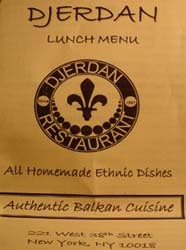
Last week, Gridskipper ran a feature on Burek in New York. Djerdan 34-04A 31st Avenue between 35th and 34th Streets in Astoria; 23-01 65th Street at 23rd Avenue in Brooklyn; and 221 West 38th Street between Seventh and Eighth Avenues in Manhattan) topped the list.

Cevabdzinica Sarajevo (37-18 34th Avenue in Astoria) was there too. A few non-Slavic places were there as well, and just might be worth checking out:
  • Zerza (Moroccan, 304 East 6th Street between First and Second Avenues in Manhattan)
  • Café Roma (Kosher, 175 West 91st Street at Amsterdam Avenue in Manhattan)
  • Tony & Tina's Pizzeria (Albanian, 2483 Arthur Avenue in the Bronx)
  • House of Pita (Middle Eastern, 32 West 48th Street in Manhattan)
  • Tasty Shawarmy (Middle Eastern, 71 7th Avenue South at Bleecker Street in Manhattan)
  • Aroma (Israeli, 160 Wooster Street at Houston in Manhattan)
And don’t forget Bosna Express (31-29 12th Street in Astoria), which somehow failed to make the list at all.

Previously on Slavs of New York:
Another Cevapdzinica opens in Queens, Bosnian Grocery Shopping and Cravings takes on Bosnian and Polish cuisine

Tuesday, October 10, 2006

Cravings takes on Bosnian and Polish cuisine

Local foodie website Cravings recently published a feature on ethnic restaurants in the five boroughs, and singled out Bosnian and Polish cuisine for special attention.

They declared Burek of course as the highlight of Bosnian cuisine, after a visit to Djerdan (221 West 38th Street between 7th and 8th Avenues). Slavs of New York would go a bit further and also recommend the cevapci.

As for Polish cuisine, the star at Polam International Market (952 Manhattan Avenue between India and Java Street, Greenpoint) was the stuffed cabbage – at about 70¢ each!

Meanwhile, Cravings enjoyed the smoked bacon spread at Damis (931 Manhattan Avenue between India and Java Street, Greenpoint). The food at this jungle-themed restaurant apparently wasn’t up to snuff, but the meal was saved by this bacon spread which came free with the basket of bread before dinner was even served.

Tuesday, June 20, 2006

Bosnian Grocery Shopping

Back in March, the New York Times published Alan Flippen’s The Tastes of Bosnia Follow Those Who Fled, about the arrival of foodstuffs from Bosnia and the former Yugoslavia to grocery store shelves in New York.

According to the article, products such as suho meso (smoked beef), ajvar (a sort of relish), pekmez od sljiva (a fruit spread), Travnik feta cheese and traditional Bosnian Turkish coffee started showing up in New York, primarily in Queens, along with refugees from the war in Bosnia in the early 1990s. The ensuing three-fold increase in the city’s Bosnian population has kept sales of the food products going.


Though there are numerous places around to get former Yugo ingredients, the article points to Euromarket (30-42 31st Street near 30th Avenue, Astoria) and Grand Prix Trading Corporation in Ridgewood.

Previously on Slavs of New York: Another Cevapdzinica opens in Queens

Friday, February 03, 2006

GLBT Slavs of New York

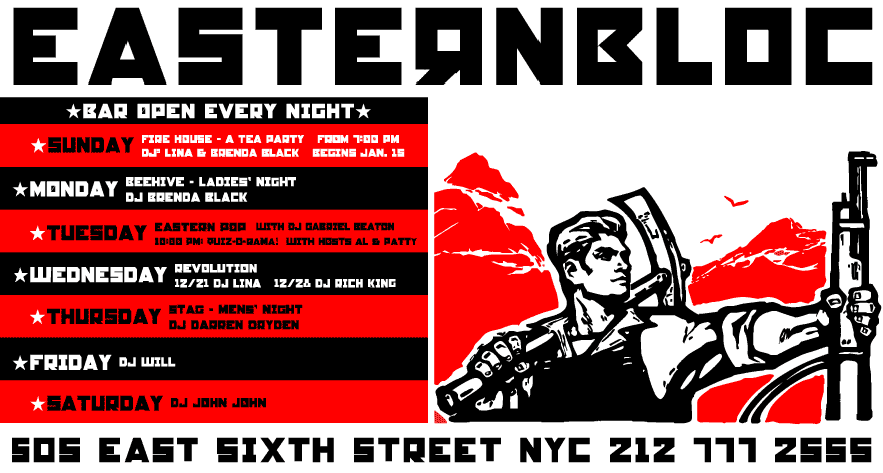
The East Village, Manhattan's Slavic heartland, is now home to the city's first official Slavic gay bar (sort of). Back in December, Eastern Bloc (505 East Sixth Street at Avenue A) opened for business with a decidely SocArt theme. The clientel might not be Slavic, but the decor is ochen' Soviet.

Meanwhile, Siberia (356 West 40th Street) has recently started up a Saturday night GLBT party called Cruising. Cover is $5.00 before midnight, $10.00 after. And the 23-29 November 2005 issue of the NY Press mentions Secrets (1321 Avenue Z between East 13th and East 14th Streets) out in Sheepshead Bay, Brooklyn, near the Russian enclave of Brighton Beach. Though it is surrounded by Russian bars, the Press does not indicate that this bar is itself frequented by Russians.

GLBTs from the former Yugoslavia aren't quite left out in the cold, either. Though it (so far) only has a website and a message list, Queer Ex-YU Diaspora is doing its job to link like-minded people from the Balkans, many of whom are in the five boroughs. There is also apparently a Polish organization in the city as well, called Razem (email razem@juno.com), but it does not seem to be active at this time. Email Slavs of New York if you have any additional information.

And for the sake of being comprehensive, it also stands to point out that New York has seen its share of prominent GLBT Slavs of New York, first among whom is surely the Carpatho-Rusyn Andy Warhol. Another is the Russian artist Yaroslav Mogutin, a.k.a. Slava Mogutin. Born in 1974 in Siberia, he became the first Russian to be granted asylum in the US on the grounds of sexual orientation in 1995 and settled in New York. Since then, his celebrity as a poet and photographer has grown so much that he is now able to split his time between New York and Moscow, where he has also found an audience. Check out this interview from a 2002 issue of Index.

Wednesday, February 01, 2006

Bosnians in Astoria

New York is home to many Bosnians, who are split into Serbs, Croats and Bosnian Muslims (Bosniaks). Bosnian Serbs tend to associate with local Serbs, and Bosnian Croats likewise associate with the local Croatian community. Bosnian Muslims have cultivated a distinct community which has its own contacts with local Muslims from the former Yugoslavia (Kosovo, Sandzak) as well as with other Muslims in the area.

Regardless of whether they are Serb, Croat or Muslim, most Bosnians arrived in New York city during or shortly after the war in Bosnia (from 1992 to 1995) and settled in Astoria.

The Bosnian Muslims are well organized around religious and social organizations. They are the primary audience of at least two Islamic centers, the
Bosnian Hercegovinian Islamic Center (25-17 Astoria Boulevard, Astoria) and the Islamic Unity and Cultural Center of Plav-Gusinje (Bosnian Muslim Community of New York, 31-33 12th Street, Astoria). They are also the primary community served by the Ali Pasha Mosque in Astoria.

The Bosnian American Association Of New York (26-40 18th Street, Astoria) is the community's central social organization, and was recently featured at
Ethnic Communities.org. The BAA was initiated in 1997 to help meet the needs of newly arrived Bosnians and to help them acclimate themselves to New York, and to the United States. The Bosnian American Association was finally formed in 1999 in Astoria with 300 members.

Its membership is currently around 1000, and it focuses on five areas: English language instruction, computer training, elderly assistance, translation services and naturalization and citizenship classes. Mrkanovic and Elezovic told ethniccommunities.org that the biggest challenge facing the group now is funding, as it would like to expand its program offerings.

We hope to add additional sporting events to help organize the young people in our community, as well as movie nights that focus on post-conflict and development issues in Bosnia,” he told the website. Other ideas include micro-enterprise instruction and advanced English and citizenship classes, as well as branching out to non-Bosnian refugees in the area.

Aside from the Bosnian American Association, Bosnia and Bosnians are also the focus of the New York-based
Academy of Bosnia and Herzegovina and America Bosnia Cultural Foundation. They are also active within Raccoon, which strives for reconcilation among all of the peoples of the former Yugoslavia.

Among Bosnian media locally is the newspaper
Sabah, the web magazine Bosnjaci.net, Radio Muslimanski Glas (Radio Muslim Voice), and Radio Voice of Bosnia and Herzegovina.

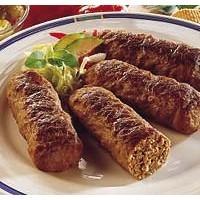
One of the most prominent features of the Bosnian community is the Cevabdzinica, the traditional Bosnian restaurant featuring the sausage-like cevapci (or cevapcici). Of the many if the five boroughs are
Bosna Express (Astoria), Cevabdzinica Sarajevo (Astoria) and Djerdan (Astoria, Manhattan, Brooklyn).

Another Bosnian cultural institution popular with New Yorkers is the
Bosnian-Herzegovinian Film Festival, now in its third year. The next festival will be from 19 to 21 May.

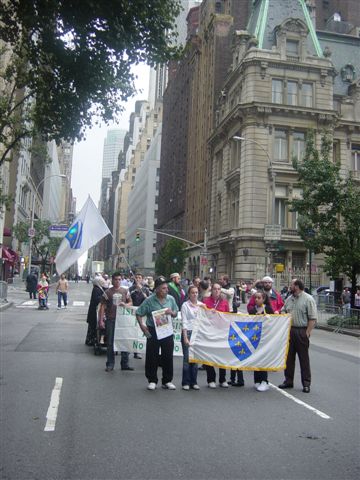
(Photo: Ali Pashna Mosque from
Dzemati.com, and Bosnians at the 2003 Muslim Parade in New York, from Radio Muslimanski Glas)

Thursday, October 27, 2005

New York City's Balkan music scene

One of the least-expected waves to hit New York City is the current Balkan gypsy music fad, led by Gogol Bordello and its illuminated frontman Eugene Hütz.

The scene started slowly at Mehanata, on the second floor of an unassuming building on the corner of Broadway and Canal Street in Chinatown. Hütz started out there as a DJ and quickly built a following. Gogol Bordello quickly followed, forming in 2000. The band performs what it calls "punk cabaret" music, influenced by Hutsul, Ukrainian, Romanian and Gypsy music. Hütz's rise recently culminated in a starring role in the movie Everything is Illuminated.


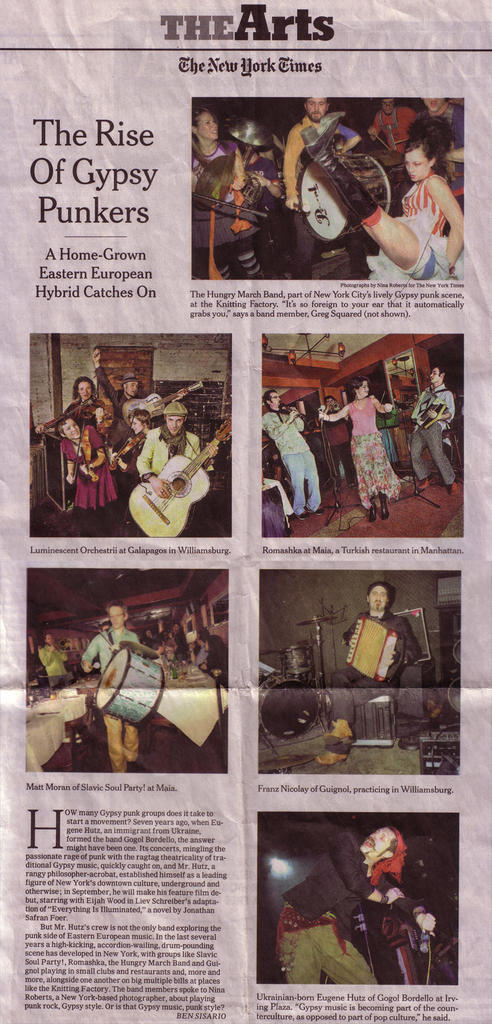
There are easily a dozen bands in the five boroughs playing one sort of Balkan music or another. Among the current favorites are Zagnut Cirkus Orkestar, Romashka, Hungry March Band and Luminescent Orchestrii. The most established are Zlatne Uste and Slavic Soul Party!, and one old favorite we'd love to see make a comeback is Pectopah.

You can catch these bands at shows all over town, particularly at Mehanata, Hungarian House, Barbes and Maia Meyhane. Other venues that frequently feature these bands include the Knitting Factory, Nublu and Satalla.


For anyone interested in learning the traditional dances that accompany the music, there's NYC Folk Dance. Each year, they schedule two seasons of low-key dance lessons as part of their Folk Dance Fridays, Family Dance and Balkan Cafe series at Hungarian House on the Upper East Side. They also run a Wednesday night Balkan dance class in Chelsea.

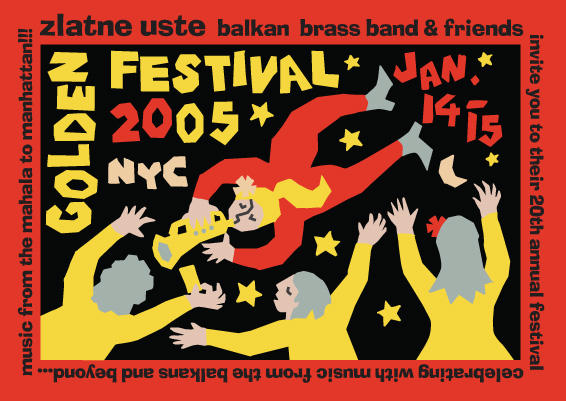
The high point of the Balkan music year in the city is definitely the Golden Festival, which next takes place on 13 and 14 January 2006. In its 21st year, the annual gathering is organized by Zlatne Uste and features countless performers on multiple stages, Balkan and Middle Eastern delicacies and art vendors.

But before that comes the first New York Gypsy Festival, which opens on Saturday and runs through 6 November. The festival, like most of the bands and events, does not feature music from Slavic lands exclusively, but covers a wider cultural area that includes Romania, Turkey and the Middle East. The highlight will be an eight-hour marathon of performances on 6 November at the Roxy.

And if you can't attend any of the events, or just want a souvenier, check out the new double CD produced by Mehanata. Tracks were provided by many bands that have performed at Mehanata, including Balkan Beat Box, the Dolomites, Gogol Bordello, Guignol, the Hungry March Band, J.U.F., Luminescent Orchestrii, Romashka, Shaat’nez, Slavic Soul Party!, Yuri Yunakov and Zagnut Cirkus Orkestar.

But why the sudden craze? Inna Barmash, the singer of Romashka, told the Times of London in May that “There is something about gypsy music that people just respond to, whether it’s flamenco, Hungarian gypsy or Russian gypsy — it catches people’s souls in a very immediate way. People seem to know how to dance to it intuitively” (check out The Gypsies pitch up in the New York Times). Matt Moran of Slavic Soul Party! told the Times that he thinks part of the reason is the opening up of the Eastern Bloc and the floods of new immigrants and refugees from Eastern Europe and the Balkans. But the music and the passion behind it are the real pull - who could resist it?

Wednesday, August 10, 2005

Another Cevapdzinica opens in Queens

The Village Voice recently reviewed Bosna Express, a new cevapdzinica in Long Island city. A cevapdzinica is a restaurant that serves Balkan food, but focuses on cevapci, a traditional sausage plate.


Read Robert Seitsema's "Leapin' Lepinja" at http://www.villagevoice.com/nyclife/0531,sietsema,66401,19.html

  • Bosna Express31-29 12th St., Long Island City, Qns718-932-5577
Also check out:
  • Cevabdzinica Sarajevo Restaurant 37-18 34th Ave., Astoria718-752-9528
  • Djerdan221 W. 38th St.between Seventh and Eighth Aves., Manhattan212-921-1183
  • Djerdan23-01 65th St., at 23rd Ave., Brooklyn 718-336-9880
  • Djerdan 34-04A 31st Ave.between 35th and 34th Sts., Astoria718-721-2694