Showing posts with label field trips. Show all posts

Tuesday, June 24, 2008

Field Trip: Cedar Rapids

The recent flooding in the Midwest has sadly affected a major landmark in Slavic America – the National Czech and Slovak Museum and Library in Cedar Rapids, Iowa.

Set up as a local historical institution to document the area’s Czechoslovak immigration, the museum was recognized in 1992 by Congress as a national institution. A new landmark museum and library building was inaugurated in 1995, with US President Bill Clinton, Czech President Vaclav Havel and Slovak President Michal Kovac in attendance.

Founded in 1974, the museum collection includes Czech and Slovak folk art and costumes, fine art, political history materials, maps and military objects, and a Czech immigrant’s house from 1880 was moved to the museum’s grounds, restored and opened to the public. The library includes a wide variety of books and archival materials about Czech and Slovak history and culture.

Some of the museum’s collection was able to be stored safely before the flood hit, but the scope of the flooding was unanticipated and the museum ended up under 15 feet of water. In Cedar Rapids, some 25,000 out of a population of 120,000 have been left homeless.
Metropolis has more information about damage to the museum as well as to other Cedar Rapids architectural landmarks. Radio Praha also has an article, with audio.

The Czech government has announced it
will donate $1 million towards restoring the museum, and the museum has also established a Flood Relief Fund to help towards its recovery efforts. Gifts may be made online at the museum’s website, at any Wells Fargo Bank location in the US or by mailing a check to: National Czech & Slovak Museum & Library, 30 Sixteenth Avenue SW, Cedar Rapids, Iowa 52404.

Saturday, March 22, 2008

Fieldtrip: Jordanville, NY

The head of the Russian Orthodox Church Outside of Russia, Metropolitan Laurus, was buried yesterday at Holy Trinity Monastery in Jordanville, near Cooperstown and Utica in central New York State.

The highlight of his career was perhaps his leadership in
reunifying the Russian Orthodox Church Outside of Russia with the Patriarchate in Moscow last year.

Holy Trinity Monastery has an interesting story itself. Holy Trinity Monastery was founded in 1928 by Russian emigres living in Jordanville. The community was helped by another Russian emigre, Igor Sikorsky, of aviation fame.

A second strand of the monastery’s history traces its beginnings to a group of monks who fled the Pochaev Monastery in Ukraine in the face of the 1917 Bolshevik Revolution of 1917. They ended up in the Carpatho-Rusyn village of
Ladomirova (Ladomyorova), today in Slovakia.

Metropolitan Laurus, then known as Vasyl’ Shkurla, was born in
Ladomirova on 1 January 1928, and was active in the monastic community at an early age. He later joined the community, and fled with it when the Soviets occupied Czechoslovakia in World War II. The community ended up at the monastery in Jordanville, where it remains today. The current monastery church is a replica of the one at the Ladomirova monastery.


An interesting side note is that when the monks fled Slovakia and landed in New York they brought with them a Cyrillic printing press originally donated by the Carpathian Student Union in Prague with the help of Rusyn émigrés in the United States. The press printed a major inter-war newspaper aimed at Carpatho-Rusyns in Czechoslovakia and Poland, Pravoslavnaia Karpatskaia Rus’(Orthodox Carpatho-Rus’, 1928-1944) that continues to this day as Pravoslavnaia Rus’ (Orthodox Rus’, 1947-present).

Printing remains a major activity at the monastery. Elsewhere on the monastery grounds is the Holy Trinity Orthodox Seminary.

Holy Trinity Monastery was named one of the “Seven to Save” by the Preservation League of New York State in the face of a large-scale wind power project that would see the surrounding area planted with nearly 50 wind turbines.

A full history of the monastery can be found in three parts on the ROCOR website:
one, two, three. And a video report about Metropolian Laurus, as well as about the funeral, can be found on the website of Russia Today.
More photos:


Wednesday, September 26, 2007

Photos from last weekend's Slovak Festival

Sunday was the 30th annual Slovak Heritage Festival at the PNC Bank Arts Center in Holmdel, NJ, and thanks to Erik Sunguryan, we have a selection of photos from the event:


Tuesday, September 25, 2007

Slavic sites in Chicago compete for funding

Through 10 October you can vote for a site in Chicago to win $1 million in preservation assistance from American Express in partnership with the National Trust for Historic Preservation. Even though this does not deal with New York, two of the 25 sites up for the funding are major parts of Slavic history in the United States.

First up is
Bohemian National Cemetery [official website], founded in 1877 by Czech, Slovak and Moravian immigrants and is the final resting place of former Chicago Mayor Anton Cermak. The site has been on the National Register of Historic Places only since 2006. Apart from the grounds and the memorials, the cemetery is also a major source of genealogical information.

The other site is
Holy Trinity Russian Orthodox Cathedral [official website], the only existing church in the world by Louis Henry Sullivan – one of the greatest American architects of the 20th century. The church was founded with money from Czar Nicholas II and built in 1903 to serve the local Carpatho-Rusyn communities. It has been on the National Register of Historic Places since the late 1970s.

Take your pick, just make sure you
vote before 10 October!

Tuesday, May 01, 2007

Slavs of Yonkers!

Starting 1 May, New York Water Taxi is offering commuter service to Yonkers, with boats making the trip between Yonkers, the World Financial Center and Wall Street Pier 11. All through May, email your name, phone number and mailing address to mailto:info@nywatertaxi.com, and New York Water Taxi will send you a free pass (normal one-way $12.00).

You can use the free pass to explore the Slavs of Yonkers!

Yonkers’s
Czech connections date from colonial times, when Frederick Phillipse arrived from Bohemia. His homestead today is the Philipse Manor State Historical Site (corner of Warburton and Dock Streets).

The city’s Slovak pedigree is equally as impressive. There is the Catholic Slovak Club (49 Lockwood Avenue) as well as a number of Slovak churches, including St. Paul’s Slovak Evangelical (15 Old Jerome Avenue),
Holy Trinity Slovak Lutheran Church (60 Mulberry Street) and Holy Trinity Roman Catholic Church (18 Trinity Plaza). The history of that last church has been documented in Thomas J. Shelley’s 2002 book Slovaks on the Hudson.

Poles in Yonkers congregate at
St. Casimir’s Catholic Church (239 Nepperhan Avenue), in the Hollow/Nodine Hill neighborhood. The parish celebrated its 100th anniversary in 2000. The building itself dates from 1927. The church has maintained a Polish identity even as Polish immigrants and their descendants have largely moved out of town.

There is no significant Slovene community to speak of, but at least one Slovene artist is active in town –
Marko Gosar. Gosar is a decorative artist trained in Slovenia but based in Yonkers.

Judging from internet presence, however, the largest three groups are also the most complicated: the Russians, Ukrainians and Carpatho-Rusyns.
Michel Fokine, the Russian ballet dancer, lived at Chateau Fleur de Lys (170 Shonnard Terrace), but the vast majority of the city’s Russian community was not really Russian at all.

Holy Trinity (Trinity Plaza, 46 Seymour Street) is a Russian Orthodox Church but it was founded in large part by Lemkos. Today, Lemkos usually identify themselves as either Carpatho-Rusyns or Ukrainians but at the turn of the 20th century many also identified as Russians. The building dates from 1905 and the parish celebrated its centennial in 1999-2000.

The centerpiece of Lemko life in Yonkers traditionally was Lemko Hall (556 Yonkers Ave - history in .pdf and one more), but it was sold several years ago and is no longer used by the local Lemko community.


Yonkers also used to be home to the Lemko Association of the US and Canada, publisher of the newspaper Karpatska Rus’/Carpatho-Rus’, but it has moved it New Jersey. The paper started out as Lemko in 1927 and today is the only Rusyn-language newspaper regularly published in North America.

Rusyn-oriented Lemkos congregate at St. Mary's American Carpatho-Russian Orthodox Church (485 North Broadway).

Ukrainian-oriented Lemkos set up the
Organization for the Defense of Lemkivshchyna (Lemko Western Ukraine) in 1936, and a Yonkers branch was established in 1957 at St. Michael's Ukrainian Catholic Church (corner of 510 North Broadway & 21 Shonnard Place). While the organization may be having trouble attracting young people, it nevertheless is active. The key annual event is the Lemko Vatra held upstate in Ellenville, NY.

St. Michael’s church building dates to 1978 but the parish was founded in 1899. It is home to the annual
Yonkers Ukrainian Heritage Festival. This year, it takes place on 15-17 June (Slavs of New York).
Other Ukrainian groups in Yonkers include the
Ukrainian Ski Association, Na Zdorovya band, a branch of the youth organization CYM and a branch of the Ukrainian American Veterans.

Thursday, January 18, 2007

The (Rusyn) Russian Orthodox Church in Jersey City

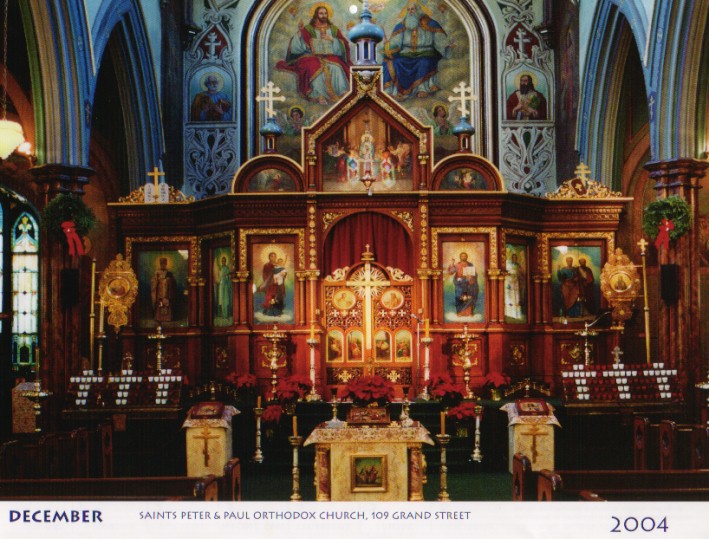
On Wednesday, NJ.com featured "An Overflowing Bounty of Beauty," the latest entry in the series of architecture columns by John Gomez. The article presents SS. Peter and Paul Russian Orthodox Church (109 Grand Street) in Jersey City, which has recently undergone some renovation.

Gomez writes:

“The proud parish, readying for its centennial, prepares to look back on the origins of its own story, which began in 1889 when three Slavs - Wasyl Krynicki, Andrej Cislak and Paul Stupinski - established the ‘Sts. Peter and Paul Kranken Unterstutzung Verein of Jersey City,’ a civic and religious ‘brotherhood’ set up to assist Slavic immigrants.”

But those three Slavs were not just Slavs – they were Carpatho-Rusyns. Lemkos, to be precise.

In any case, the church has a long and storied history. After its founding by Lemko Rusyns, it was led by Archpriest
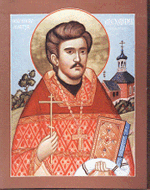
Alexander Hotovitsky, a Russian, who was canonized in 1994 as “Missionary to North America and New-Martyr of Russia” (he was killed by the Bolsheviks late in the 1930s after years of persecution). Hotovitsky lived and worked in and around New York from 1895 to 1914, based out of the then-newly-founded St. Nicholas Russian Orthodox parish. He is remembered as a major force in New York City's Slavic history.

As for the building itself, it was built in 1853 as a Dutch Reformed church in the Gothic Revival style. After it was purchased by the Russian Orthodox parish in 1908, it was renovated to conform to the Orthodox community’s needs.

The interior was painted floor to ceiling by Photius Bodasiak, an iconographer from Kyiv, who completed the more than 70s murals that cover the internal walls in just three years, from 1924-1927. On the exterior, onion dome cupolas and Orthodox crosses were added, which were the focus of the recent restoration efforts.

(Photo from
http://www.jerseycityhistory.net/2004calendargallery.html)

Tuesday, January 16, 2007

Slavs of Alexandria

Last week, it was announced that a memorial plaque is going up in Alexandria, Egypt, to commemorate the contributions of Slovene women to the city (cf. Egiptovski spomin na slovenske aleksandrinke, 10 January in Večer).

As it turns out, these women – called Aleksandrinke – had quite a story. In the late 19th and early 20th centuries, about 7000 girls and women from the Primorska area in what is now western Slovenia and the Italian areas around Trieste went to Egypt – mostly Alexandria but also Cairo – to earn money to send back to their struggling families.

The migration was tied to the opening of the Suez Canal in 1869, which saw many European businessmen relocate to Egypt. They were hesitant to hire locals as servants but Slovene women were prized for their cleanliness and trustworthiness. Others worked for wealthy Egyptians – for example, Milena Fagannelli, a Slovene from the village of Mirna near Trieste, was the nanny of Boutros-Boutros Ghali, who was Secretary-General of the United Nations from 1992-1996.

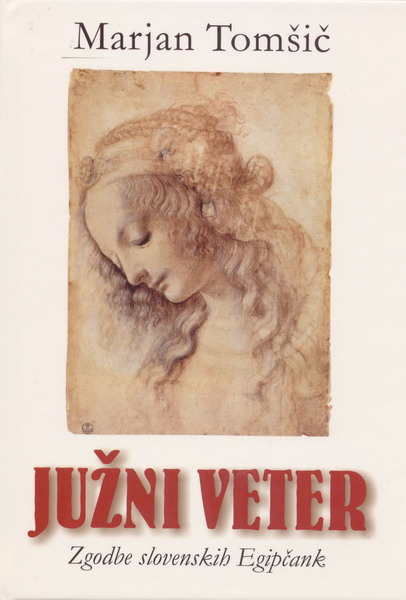
They are remembered today by a small museum in the Slovene town of Prvačina, near Nova Gorica, and in books such as
Marjan Tomšič’s Grenko morje (Bitter Sea, 2004) and Južni veter (South Wind, 2006).

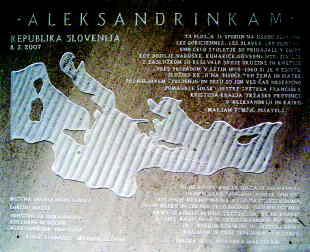
And now they will also be remembered by a memorial plaque by sculptor Janez Lenassi, to be unveiled on 8 February, the national holiday of Slovene culture. The plaque reads:

“This plaque is in memory of the fate of the Slovene women, les Goriciennes, les Slaves, les Slovenes, For an entire century they came to Egypt as wet nurses, nannies, cooks, governesses and seamstresses. With their earnings, they saved their families and homesteads from ruin. In the years 1860-1960, thousands of wives and mothers earned their daily bread in Egypt. Their lives and work were unselfishly aided the whole time by the Sisters of Saint Frances of Christ the King of the Province of Trieste in Alexandria and Cairo.”

The plaque will be placed on the headquarters building of the Sisters of Saint Frances, Slovene nuns who helped the Aleksandrinke acclimate to their new city – particularly after it was discovered that some of the Slovene girls were being sold into white slavery. The Sisters will also be awarded the State Honor of the Republic of Slovenia at the unveiling ceremony. More info about the Aleksandrinke (in Slovene) can be found
here.

As it turns out, there are other Slavic connections to Alexandria. For one, famous Russian ballerina Anna Pavlova and
other artists fleeing the Russian Revolution found refuge in the city, at least for a time. Today, there is a Russian Cultural Center and a Consulate General in Alexandria.

The
royal family of Bulgaria also found refuge in Alexandria when it was forced to abdicate in 1946 in the face of its own Communist revolution.

And the
Library of Alexandria, the recently recreated wonder of the ancient world, is home to a memorial plaque to Ukrainian poet Lesya Ukrainka, who lived in the city from 1910-1913.

Monday, January 08, 2007

Slavs of Zurich

The Slavs haven’t made much of a mark on Zurich so far, but there are a couple significant points of interest.

One of the more random Slavic landmarks is
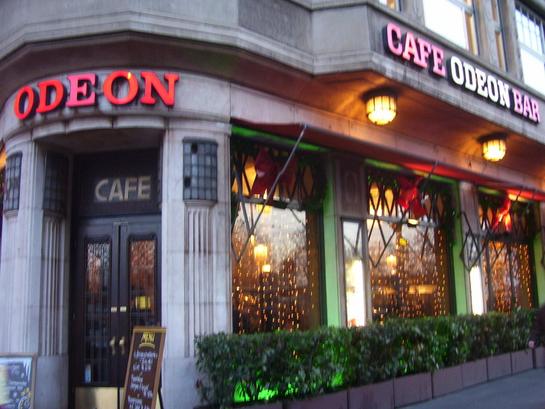
Cafe Odeon (Limmatquai 2), where Vladimir Lenin whiled away the hours planning the Russian Revolution. Lenin lived in exile in Geneva from 1903-1905 and in 1908, and then from 1914-1915 in Bern, where he quickly became disillusioned by the locals’ lack of interest in his theories of Communism.

In 1916,
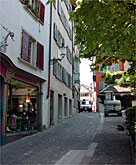
he moved to Zurich and found an apartment at Spiegelgasse 14. There, he continued his revolutionary activities. Among the highlights of his carrier in Zurich was the completion of “Imperialism: the Highest Stage of Capitalism.” On 9 April 1917, Lenin was able to return to St. Petersburg to lead the Revolution.

Alexander Solzhenitsyn’s
Lenin in Zurich details this period in Lenin’s life. Zurich was also home to Leon Trotsky for a time.

Relations between Switzerland and Russia were strained after a
tragic 2002 plane crash, but this has not stopped Russian tourists from visiting Zurich. However, Russians are more likely to come to Zurich to spend money these days rather than to plan revolutions.

Another Slavic point of interest is the
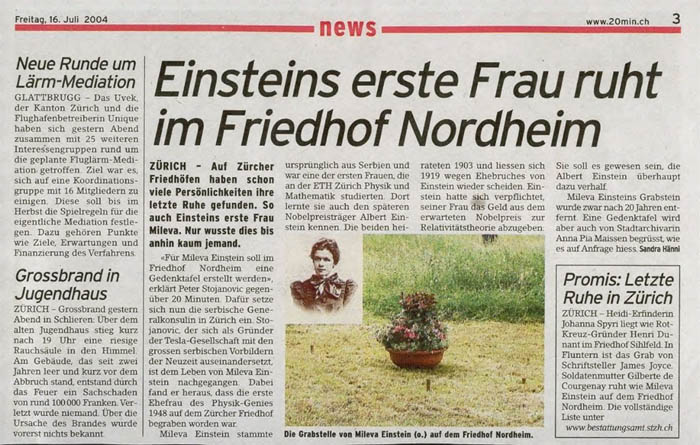
grave of Albert Einstein’s first wife, Mileva Maric (1875-1948) of Titel, near Novi Sad, in Serbia. She died in Zurich on 4 August 1948 and is buried in the city’s Northeim Friedhof Cemetery. The grave is currently unmarked, however, and New York’s Tesla Memorial Society is trying to raise funds to restore the site.

About 213,900 strong, Serbian and Montenegrin nationals make up the second-largest group of foreigners in Switzerland after the Italians. Taken together, there are about 370,000 former Yugoslav nationals in the country. They haven’t made much of a mark on Zurich yet, though. There are also a number of Rusyns from the former Yugoslavia living in Switzerland.

Thursday, September 28, 2006

Slavs of Chicago!

Travel blog Gridskipper featured Chicago’s Bulgarian community yesterday with Chicago's Bulgarians at the Gates.

The post includes a Bulgarian tour of the city, including
Cafe Florida (4356 N. Leavitt Street), Sofia In Chicago (9439 Irving Park Road, Schiller Park) and Cafe Mirage (9845 Lawrence Avenue, Schiller Park). Gridskipper also advises a stroll down Adams Street, ground zero for the local Bulgarian community. And there’s also links to two local newspapers, Bulgaria-Weekly and Bulgaria 21.

Even more significant is a link to Bulgarians in Chicago, an article from the
Encyclopedia of Chicago, which unlike the Encyclopedia of New York is online.

Other gems include the entries on Belarusians, Bosnians, Croatians, Czechs and Pilsen, Macedonians, Poles and Polonia, Russians and Holy Trinity Russian Orthodox Church, Serbs, Slovaks, Slovenes, Ukrainians (including Carpatho-Rusyns) with Icon of the Annunciation at St. Nicholas Ukrainian Church and Ukrainian Village, and Yugoslavs.

Tuesday, August 29, 2006

Slavs of Boston & Cape Cod

New England may not be a hotbed of Slavic culture in the US, but there are a few things here and there if you take the time to seek them out.

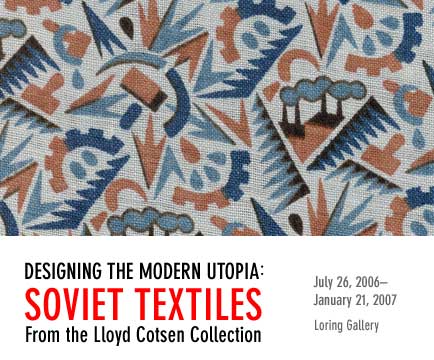
Through 21 January 2007, the Museum of Fine Arts (465 Huntington Avenue) is featuring the exhibit Designing the Modern Utopia: Soviet Textiles from the Lloyd Cotsen Collection. The show presents nearly 100 rare textiles and drawings made between 1927 and 1933, and puts them into the context of early Soviet history. On 3 December, the museum is organizing a symposium that will include presentations on topics such as textiles and propaganda, sports in Soviet culture, Soviet textiles in the context of Soviet visual culture and utopianism in the late 1920s and 1930s (Remis Auditorium, time TBD, free with museum admission). And if you can’t make it to Boston, the catalogue can be ordered from Amazon.com.

Boston's historic Russia Wharf area is home to the
Russian American Cultural Center of Boston, which seems to be the only such Slavic institution in town. The Ukrainian Research Institute Harvard University has public programs and is a good stand in for a Ukrainian cultural center, however.

There’s no Bulgarian cultural center in Boston, but there must be a good number of Bulgarians.
BG Focus Boston is a good place to go for info on the local scene.

One highlight of the Bulgarian cultural scene in Boston is the Monday night
dance class (Mondays at 7:30 p.m. at Green Street Dance Studios, 185 Green Street, Cambridge; $12.00 per class).

Another point of interest is Lana Orna (255 Newbury Street), a shop selling jewelry manufactured in Bulgaria, which has just opened on one of Boston’s most fashionable streets.

As far as Boston goes, there are several community websites with helpful information such as
Russian Boston, and Polish Boston and PolHome. There are also a few organizations in Boston, such as the Bostonian-Belarusan Organization Committee, the Carpatho-Rusyn Society New England Chapter, and the Serbian American Alliance of New England and the Organization of Serbian Students Abroad.

Out on Cape Cod, the highlight is
Pain D’Avignon (192 Airport Road, Hyannis), a bakery owned and operated by one French Canadian and four men who fled Belgrade in the early 1990s (check out Newcomers invigorate the Cape, from The Boston Globe).

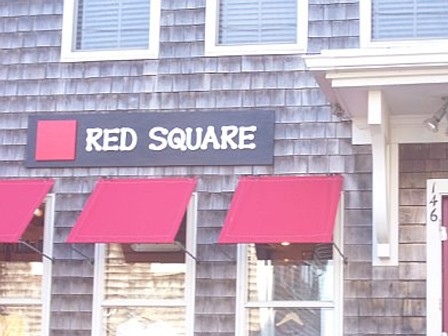
Red Square (146 Commercial Street, Provincetown) has a Russian-ish name, but not much else. Cute clothes though.


Cape Cod is also home to the Russian-themed Samovar Gifts & Treasures, the Polish Society of Cape Cod and the Bulgarian Cape Cod community website.

Thursday, August 24, 2006

Slavs of Pittsburgh!

Pittsburgh is one of the few places in the country that eclipse New York for Slavic goodness. Nearly every Slavic group is represented, and a Slavic vibe is everywhere. Where else will you find a full radio dial of Slavic programs, and cut-throat competition among Slavic folk dance troupes? Here are just some of the highlights, since a full treatment would require its own webpage:

A good place to start for general information is
Global Pittsburgh, which lists information and resources for various groups in town, among them the Bulgarians and Macedonians, Croats, Poles, Russians, Serbs, Slovaks and Ukrainians. If you’re looking for tours, check out Pittsburgh Neighborhood Tours, and the Visitors’ Bureau Andy Warhol’s Pittsburgh tour, both of which feature local Slavic sites prominently.

Tourists love the
Nationality Rooms at the Cathedral of Learning (the tallest educational structure in the world until Krushchev’s 1959 visit, which led him to raise the spire of the main building of Moscow State University to take the title). The Slavic Nationality Rooms are: Czechoslovak (Room 113), Polish (126), Yugoslav (142), Russian (153) and Ukrainian (341). The Senator John Heinz Pittsburgh Regional History Center (1212 Smallman Street, Strip District) also has some Slavic artifacts on display.

Of the numerous annual events, the most popular by far is the
Pittsburgh Folk Fest, which regularly sees participation by Bulgarians, Croats, Poles, Rusyns, Serbs, Slovaks and Ukrainians. This past summer (2006) marked its 50th year. And local amusement park Kennywood has Nationality Days each summer, and there are several Slavic ones: Carpatho-Russian Day (since 1930), Serbian Day (1917), Slovak Day (1920), Slovene Day (1995), Polish Day (1931) and Croatian Day (1917). The University of Pittsburgh’s Department of Slavic Languages and Literatures also organizes a number of events throughout the year.

Earlier this year, the
Bulgarian-Macedonian Cultural Center (449 West 8th Avenue, West Homestead) celebrated its 70th anniversary. One of the reasons it’s made it so long is that it’s kept up with the times. The 1980s and 1990s saw declining membership in folk dance troupes and fraternal organizations and a general drop off in Slavic cultural activities. The Bulgarian-Macedonian Cultural Center was the first ethnic organization to really recreate itself as a sexy nightspot for young people and a serious destination for tourists.

Local Carpatho-Rusyns organized into the
Carpatho-Rusyn Society are hoping to have similar success when they open the National Carpatho-Rusyn Cultural and Educational Center in the currently-under-renovation St. John Greek Catholic Cathedral (Dickson Street, Munhall). Meanwhile, their annual event at the Andy Warhol Museum (117 Sandusky Street, North Side) has made great strides in making Rusyn ethnicity more interesting to young people both within and outside the community.

In October, local
Ukrainians will also be opening a museum, at St. John the Baptist Ukrainian Catholic Church (Seventh and Carson, South Side). And next year the Slovaks will get their own museum as well.

Croats are also well represented in Pittsburgh, with
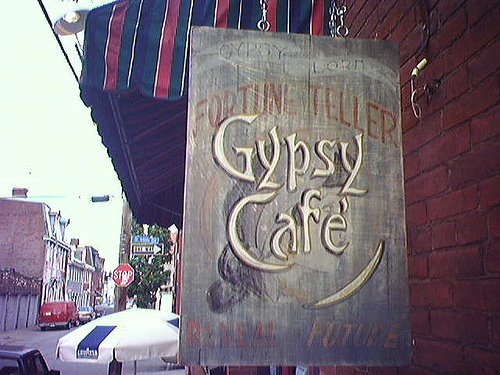
The Croatian Fraternal Union (100 Delaney Drive), the Preserve Croatian Heritage Foundation (East Ohio Street, North Side) and churches and other institutions. Serbs socialize at the American Serbian Club (2524 Sarah Street) and Gypsy Café (1330 Bingham Street, South Side). There is also a Serbian soccer team, the Fudbalski Klub Nikola Tesla. Some of the Polish groups include the Polish Hill Civic Association of Pittsburgh, the Polish Cultural and Political Association of Allegheny County and the Polish Falcons of America-National Headquarters.

Czechs, Slovaks and Rusyns have a particular attachment to Pittsburgh. In 1918, Czech, Slovak and Rusyn leaders signed the Pittsburgh Agreement, heralding the birth of Czechoslovakia when the First World War ended (most of the Rusyn territories were later occupied and then annexed to the Soviet Union after World War II). There’s a memorial in the lobby of the Dominion Tower (625 Liberty Avenue, Downtown), though the agreement was actually signed in the nearby Moose Hall, destroyed in 1984. For something a bit more social, try the local Slovak club, the
John Kollar Slovak Literary and Library Society, a.k.a. the Kollar Club (3226 Jane St, South Side).

Just outside of Pittsburgh is Pennsylvania’s smallest municipality: SNPJ Borough, population 1. Years ago, the Slovene fraternal organization
Slovenska narodna podporna jednota wanted to set up a campground, but the county where the land was situated was dry. The only solution was to secede, and so was born SNPJ Borough. Today, the town is home to a recreational center and the SNPJ Slovenian Heritage Center.

One strange thing is that for all the Slavic places in and around Pittsburgh, there aren’t very many Slavic restaurants (though most of the social clubs do serve food). One notable exception is
Pierogies Plus (342 Island Avenue, McKees Rocks). There are a couple of Russian grocery stores as well, such as Gourmet Market (2733 Murray Avenue, Squirrel Hill) and Ethnic Foods, Taste of Europe (4374 Murray Avenue, Squirrel Hill).

Wednesday, August 23, 2006

Slavs of Atlantic City!

Atlantic City isn’t exactly a cultural tourism destination, but like Las Vegas, there’s at least a little bit of something once you scratch the surface. The Russian mafia aren’t the only Slavs in town.

A lot about Atlantic City is similar to Las Vegas, and just like it’s desert cousin AC has its own branch of Red Square (at the Quarter at Tropicana, 2801 Pacific Avenue). And just like the Las Vegas venue, this one also features a Lenin statue and someone’s idea of a “distinctly Russian ambiance.” The bar has sub-zero vodka lockers, and women get fur coats and men get Russian army coats to venture inside.

A bit lower key is
Globus Polish Service (4005 Ventnor Ave), which has groceries and other products from Poland, Bulgaria and other regional countries, phone cards and offers other services such as package delivery and money transfers to Eastern Europe.

Snejana “Snow” Urbin, a star of Fox’s So You Think You Can Dance was born in Siberia, but for now she’s holed up at the Tropicana promoting her live show
Burn the Floor Presents FloorPlay. Catch it before it closes on 1 September.

Finally, Russians, Bulgarians, Poles, Serbs, Ukrainians, Macedonians, and others will descend on the Borgata (1 Borgata Way) on Sunday for Eurofest 2006, starting at 10:00 p.m. The party is being billed as the city’s largest Euro gathering ever and will feature house, hop hop, electro, trance, and pop/folk music. No cover, and there will be drink specials.