Showing posts with label carpatho-rusyns. Show all posts

Thursday, November 27, 2008

Slavs at the 1939 World's Fair in Queens

The other week, Slavs of New York was lucky enough to join the Municipal Arts Society’s walking tour of Bohemian National and the Sokol Halls, led by Joe Svehlak. Everyone is encouraged to visit Bohemian National Hall, but Sokol Hall is a bit less of a public space so getting inside was a treat.

Just inside the door is a small pub, and among the decorations are five large medallions – one each for Bohemia, Moravia, Silesia, Slovakia and Subcarpathian Rus (Ruthenia), the five parts of Czechoslovakia from 1918 to 1939. The guide said they were originally from the Czechoslovak pavilion from the 1939-1940 World’s Fair in Flushing Meadows, Queens.


The Munich Agreement was in September 1938, and Hitler invaded on 14 March 1939. Slovakia declared independence on 14 March, and Ruthenia on 15 March (the latter was then occupied by Hungary just about 24 hours later). The rest of Czechoslovakia was reorganized as the Nazi Protectorate of Bohemia and Moravia. Czechoslovakia would not reemerge until the close of World War II.


So how was there a World’s Fair pavilion for a state that did not exist?

Turns out, the contract with the fair organizers was signed in 1938, and at the time of the Nazi invasion the following March the building was already about half-done.
The plans were scaled down, but preparations went forward.

Mayor Fiorello La Guardia emerged as a leading proponent of Czechoslovak independence, quickly meeting with Czechoslovak representatives and assuring that so long as the United States did not recognize the German moves the Czechoslovak envoys would keep their titles and authority. When Nazi Germany (the only major country not participating in the fair) tried to keep the Czechoslovak pavilion from opening, La Guardia set up a “citizens’ committee” to raise funds to help complete the pavilion and its exhibits.

The pavilion became a
symbol of Czechoslovak resistance to Nazi domination. Former Czechoslovak president Edvard Benes spoke at the dedication of the pavilion on 31 May, highlighting the struggle of the Czechs, Slovaks and Carpatho-Russians (Rusyns) in Europe and thanking La Guardia, noting that “This pavilion, ladies and gentlemen, is the free and independent Czecho-Slovakia of the near past and the free and independent Czecho-Slovakia of the near future.”

The Czechoslovak pavilion stood
between the pavilions of the Soviet Union and Japan. Here’s a description of the finished pavilion from the New York Times on 30 April 1939:

The progress of the country during its twenty-year existence is the central theme, and the products and resources of the land and people are represented and demonstrated – such products as iron, steel, textiles, shoes, beer, hams, Glass blowing and etching are shown. A restaurant and open-air beer garden are included in the project.

Yugoslav pavilion featured a large, illuminated map of the country, as well as a model of the oldest pharmacy in the world, from Dubrovnik. Also highlighted were Yugoslavs who have made contributions to the United States, such as Nikola Tesla and Michael Pupin.

Mayor La Guardia spoke in Croatian, a language he learnt while stationed in the United States Consular Service in Fiume (Rijeka), at the opening of the Yugoslav pavilion in May. Among his comments:

The people of Yugoslavia are generous, kindly and peace-loving. Whenever there is trouble in the Balkans, look for the reason, and it will be found to come from without and not from within. Let the strong and big nations leave the Balkans alone and peace will prevail there.

Among the 60 states participating at the 1939 World’s Fair were three more Slavic states: Yugoslavia, Poland and the Soviet Union.

The

The Polish pavilion was built around the 348th anniversary of the first Polish Constitution, and included – among a wide variety of exhibits – the Jagellonian globe, which is believed to be the first to show the name “America.”


The statue of King Jagiello by Stanisław K. Ostrowski, originally placed in front of the Polish pavilion, is one of the rare artifacts of the 1939-1940 World’s Fair still publicly displayed in New York. The statue now sits in Manhattan’s Central Park, near the Turtle Pond.


The Soviet Pavilion was universally acclaimed as a major highlight of the fair. The building was the tallest on the fairgrounds, other than the iconic Trylon structure. Estimates for its cost ranged from $4 to 6 million, by far the most of any World’s Fair structure. Among the materials used in its construction were nine different sorts of marble brought over specially from the USSR.

The building was topped by a 79-foot-tall worker holding aloft an illuminated red star, nick named Big Joe. After complaints, Fair officials had to put a US flag atop the Parachute Jump (which was later relocated to Coney Island) to ensure it flew higher than the Soviet star.

Exhibits inside included a map of the Soviet Union covered in precious stones, two cinemas, a restaurant, and even a full-scale replica of a portion of Moscow’s Mayakovsky metro station (the station was brand new, having just been completed in 1938).

At the end of the 1939 season, the
Soviet Union pulled out of the fair, and its building was taken apart and shipped back to Moscow.


On 3 January 1940, the New York Times ran a story about the dismantling of Big Joe entitled “Soviet Worker at Fair is ‘Purged’” commenting tongue-in-cheek that “Stalin’s extended his purge to the United States yesterday and ‘Big Joe’… was decapitated by a derrick.”

Initially, there were plans to reassemble the pavilion at
Gorky Park in Moscow, but this was never done and the final fate of Big Joe and the rest of the exhibits remain a mystery.

Wednesday, September 24, 2008

Walking Tour: Slavs of Greenpoint

Greenpoint is the preeminent Polish enclave in New York – and one of the largest outside of Poland itself. According to the 2000 Census, New York had the second-largest Polish community in the country after Chicago, and the majority seem to live in Greenpoint.

The Polish presence is so strong that even though you downloaded that
Polish-language primer from GreenPunkt as a joke, it turned out to be pretty useful in the end. Kirk Semple wrote recently in The New York Times that the booming economy in Poland is luring more Poles home and may leave Polish Greenpoint a part of history. But for now, there’s still much to see – even if gentrification is an ever-increasing force in the neighborhood and the promise of a better life now has many local Poles rethinking life in their homeland.

Since they’re close, this walk actually starts in
Williamsburg, at the Bedford Avenue L station. Walk Up Bedford Avenue and you’ll immediately pass both Raymond's Place (124 Bedford Avenue) and Kasia’s Restaurant (146 Bedford Avenue). Turn right along North 12th Street, walk to Driggs Avenue and you cannot miss the landmark Russian Orthodox Cathedral of the Transfiguration of Our Lord (228 N.12th Street at Driggs).

From here, go back out to Bedford Avenue, keep walking north and you’ll hit Father Jerzy Popieluszko Square. Popieluszko was a priest martyred by Poland's Communist government in 1984 for supporting the emergent Solidarity movement. The monument was erected here just six years later, in 1990.

At the fork, keep right and walk along Nassau Avenue (passing the Nassau Avenue G station), and you should see a number of Polish
milkbars and restaurants, including Lomzynianka (646 Manhattan Avenue), Pod Wierchami (119 Nassau Avenue) and Pyza (118 Nassau Avenue).

At Eckford Stret, turn right and walk down to Driggs Avenue to the
Polish National Home (a.k.a. the Warsaw) (261 Driggs Avenue). This former ethnic social club in recent years has recast itself as a major club venue.

From here, walk down Driggs to Humbolt, where you’ll see Walesa-Solidarity Square (a.k.a. Humbolt Street) and Pope John Paul II Plaza (Driggs Street) near the center of Greenpoint’s Polish community,
St. Stanislaus Kostka Church (607 Humboldt Street at Driggs).

Turn right and walk up Humbolt St. back to Nassau Avenue, where you’ll find Old Poland Bakery and Restaurant (192 Nassau Avenue). Have a snack, or continue on to Manhattan Avenue and turn right. Near Norman Avenue is Krolewskie Jadlo (694 Manhattan Ave), guarded over by a Polish knight.
At the next intersection (Manhattan and Meserole), you’ll find Club Europa (98 Meserole Avenue) to the left, and the fantastic Wedel chocolate shop (772 Manhattan Avenue) on corner to the right. If you can, make SURE to check this place out around Christmas time!

Further along Manhattan on the next block is yet another Polish restaurant,
Christina's (853 Manhattan Avenue), and Polonia Bookstore (882 Manhattan Ave) where you can get books in Polish as well as books to learn Polish. If you turn right onto Greenpoint Avenue, Club Exit (149 Greenpoint Avenue, check out Clubbing in Greenpoint) is just off Manhattan Avenue.

The next intersection is with Kent Street, and just past Manhattan Avenue to the left is the former Carpatho-Rusyn
Greek Catholic Church of St. Elias (149 Kent Street (Manhattan Avenue & Franklin Street) and to the right, the Polish and Slavic Center (177 Kent Street and the Polish and Slavic Credit Union (175 Kent Street), two major local institutions.

And at the next intersection, turn right on Kent Street and you’ll find
Ksiegarnia Literacka (161 Java Street). This one is the classiest of Greenpoint's Polish bookstores, and even if you don't read the language it's well worth dropping in just to take a look. It's also the end of the tour - unless you're feeling adventurous and want to check out the Pulaski Bridge (keep waking up Manhattan Avenue to the end and turn right on Ash Street and hike out to McGuiness Boulevard).

When you're done, you can walk back to the Bedford Avenue L train or the Nassau Avenue G, but the closest will be the Greenpoint Avenue G station at the intersection of Greenpoint and Manhattan Avenues.

Sunday, August 10, 2008

Walking Tour: The East Village

Start at Union Square, and walk east along the northern side of 14th Street. You will soon hit a small shop, Russian Souvenirs (227 14th Street), between Second and Third Avenues. The shop has seemingly been there forever, and is a great place for traditional Russian arts and crafts, and Soviet kitsch.

Once you hit Second Avenue, you can walk north one block to Stuyvesant Square (not really part of the East Village, but close enough), where you will find the Byzantine (Ruthenian) Catholic church of
St. Mary (246 East 15th Street), dating from 1964.

Diagonally across the park, at East 17th Street and Nathan D. Perlman Place is a
bust of Czech composer (and Slav of New York, at least for a time in 1892) Anton Dvořák by Yugoslav sculptor Ivan Meštrović

Leaving Stuyvesant Square, the Slavic heart of the East Village unfolds southward down Second Avenue. On the west side of the street, you pass the
Ukrainian Orthodox Federal Credit Union (215 Second Avenue) and then the Ukrainian Congress Committee of America (203 Second Avenue), and across Second Avenue on the east side are the diner Little Poland (200 Second Avenue), and the Jozef Pilsudski Institute of America in the Polish National Home (180 Second Avenue).

One of the most important blocks for our purposes is Second Avenue between St. Mark’s Place and 9th Street. On the northeast corner you’ll find the popular Ukrainian diner
Veselka Restaurant (144 Second Avenue), and right next door is the Ukrainian National Home (142 Second Avenue). Though there are no windows, the food inside is top notch. Also in the building are the Karpaty Pub, and Lys Mykyta bar.

A couple doors down is a building with an impressive medallion of Ukrainian national poet Taras Shevchenko but no other signage (136 Second Avenue). Inside are the Dibrova Social Club (CYM) and the
Ukrainian Free University Foundation Inc. Across the street you’ll find the last of the great Slavic meat markets, Baczynsky’s (139 Second Avenue, note that it is closed until September 2008).

One more block down, you’ll see the small Polish diner Stage Restaurant (128 Second Avenue), and a few doors down the Ukrainian Sports Club (122 Second Avenue).

From here, cross Second Avenue and continue west along East 7th Street to find the cultural center of the local Ukrainian Community. The landmark
St. George Ukrainian Catholic Church (30 East 7th Street) dates from 1977, but a much older structure, St. George Ruthenian Catholic Church, once stood on the same spot. On the north side of the street is the excellent Surma Book & Music Store (11 East 7th Street), well worth a visit.

Take the short side street Taras Shevchenko Place next to the church down to 6th Street. You’ll find
St. George Academy (215 East 6th Street) on the corner, and walking east toward Second Avenue you’ll find the new Ukrainian Museum (222 East 6th Street). Check out the latest exhibits, and make sure to visit the gift shop (though the selection at Surma is much wider).

Now walk back out to Second Avenue, cross to the east side of the street and walk north a few doors. You’ll see a building with a Cyrillic inscription that is the Self Reliance Federal Credit Union (108 Second Avenue). Turn onto 7th Street and walk east towards First Avenue.

A newcomer to the Slavic world of the East Village is the Polish-themed bar
Klimat (77 East 7th Street), with a wide selection of beer and wine from Slavic countries, as well as traditional Polish food. Next door is the stalwart Ukrainian bar Blue and Gold (79 East 7th Street). If you’re interested, you can continue along 7th Street and pick up the Slavs of New York Walking Tour of Alphabet City to venture further.

Otherwise, on First Avenue between 6th and 7th Street you’ll see the restaurant
Polonia (110 First Avenue), and between St. Mark’s Place and 9th Street is First Avenue Pierogie & Deli (130 First Avenue).

Around the corner is the
Slovenian parish of St. Cyril (62 St. Mark's Place), a reminder that the East Village historically was much more than Ukrainians, Rusyns and Poles. Earlier times also saw vibrant Bulgarian, Czech, Slovak, and, yes, Slovene communities (among others).

Walk back to Second Avenue and continue south. An interesting sight is
KGB Bar (85 East 4th Street), just around the corner. The building in a previous life was the home to the Ukrainian Communist Party in the United States, but today is home not only to the bar but also the Kraine Theatre.

Further down Second Avenue is the Russian
Anyway Cafe (34 East 2nd Street), and between First and Second Avenues is the Orthodox Cathedral of the Holy Virgin Protection (59 East 2nd Street). Formerly a Russian-oriented parish, the church today takes in a wider audience. The building was originally the Mt. Olivet Memorial Church, and became an Orthodox church in 1943.

Continuing along East 2nd Street and crossing First Avenue you’ll find the small shop Arka - Ukrainian Arts (26 First Avenue). The store keeps somewhat irregular hours – right now, they’re open from 10:00 a.m. to 5:00 p.m. on Tuesdays, Thursdays and Fridays.

At the end of First Avenue is
Little Veselka, which operates out of a kiosk in First Park, between 1st Street and Houston Street. Seating is available in the park.

And finally, if you’re feeling adventurous, walk down Houston and you’ll find the apartment complex
Red Square (250 East Houston Street) between Avenues A and B. On the roof is a statue of Lenin rescued from the last days of the Soviet Union.

For some good background on the Ukrainians of the East Village, check out "
Ukrainian East Village: A Shortened Oral History of an Immigrant Neighborhood” from the New York Press back in 2001. And for something a bit more substantial, taking in Ukrainians, Poles, Russians and Carpatho-Rusyns (Carpatho-Russians), try Yuri Kapralov’s Once There Was a Village, documenting the author’s time in the neighborhood in the late 1970s.

Monday, August 04, 2008

Spoke too soon: Greenpoint church to become condos

No sooner do we note a resurgence of Slavic life in the East Village in the face of gentrification than we discover a new loss in Greenpoint: the Byzantine (Ruthenian) Catholic Church of Saint Elias (143-149 Kent Street) is to be converted into condos.

The church was built in 1870 and bought by the Byzantine Catholic Eparchy of Passaic in 1943. The congregation (originally at least) was primarily Carpatho-Rusyn. The congregation has since dispersed, and the building has sat vacant for a few years.

Curbed reported today that the building is being handled by “voracious real estate machine” Massey Knakal. The exterior has landmark status and cannot be altered, but the idea seems to be to turn the inside into condos.

Back in March, the
New York Sun reported the asking price as $4.2 million. The Brooklyn Paper says that “close to 40 units” will be created in the building, at a cost of $7 million.

The Brooklyn Paper also noted that
the stained glass windows and Byzantine crosses on the roof are being removed “in hopes of not scaring away potential tenants.”

Monday, March 03, 2008

Forum of Slavic Cultures finally online!


Founded in 1994, the Forum of Slavic Cultures has only recently debuted on the internet. The international cultural organization unites representatives from all 13 Slavic countries to join forces to promote Slavic cultures at home and abroad. The organization is based in Ljubljana, Slovenia.

The Forum's members are: Belarus, Bosnia and Herzegovina, Bulgaria, Croatia, Macedonia, Montenegro, Poland, the Russian Federation, Serbia, Slovakia, Slovenia and Ukraine, with The Czech Republic as an observer status. Attention is also paid to Slavic minorities in non-Slavic countries, including the Lusatian Sorbs in Germany.

While the Forum has a variety of projects, among the most pressing right now are those designed to highlight Slavic cultures in Brussels in honor of Slovenia's current stint as the first Slavic president of the European Union.

So far, no activities have been planned for New York, but Slavs of New York is nevertheless very proud to be among the Forum's links!

Monday, October 08, 2007

Czechoslovak Independence Day Weekend

Once again, Sunday’s City Section of the New York Times featured a bit of Slavic New York – Bohemian Hall and Beer Garden in Astoria (Joseph V. Tirella’s Welcome. But Don’t Call Them German).

Last week, the Times featured the perseverance of a group of Ukrainian women in the East Village struggling to keep their luncheonette going. Formerly home to significant communities of Poles, Ukrainians and Carpatho-Rusyns, the East Village in recent years has been shedding more and more of its Slavic character.

In Astoria, however, the problem is similar but very different.
Bohemian Hall is one of the city’s oldest and most impressive Slavic sites, but is lately becoming a victim of its own success. As the beer hall gets more and more popular among New Yorkers at large, few are aware of its Czech (and Slovak) character. Many, such as one of the people quoted in the article, are under the impression that if it is a beer hall, it must be German.

Bohemian Hall is full of Czech and Czechoslovak memorabilia, Czech beers, Czech food, and a large Czech flag flies above the front door. If people are not aware of its role in the local Czech and Slovak communities, it is not for lack of trying.

The management is trying to play up its pedigree by hosting cultural events – this summer’s Czech film series, for example. Some, though think it won’t matter and the public will continue to overlook
Bohemian Hall’s Czech and Slovak character. One Czech patron concluded, “They don’t know because they don’t care.”

Meanwhile, Saturday was the annual Czech Street Festival on 83rd Street between Park and Madison. The festival celebrates the independence of Czechoslovakia in 1918, and even though it is primarily a Czech event today, it also features New York’s Slovak and Carpatho-Rusyn communities who also made up Czechoslovakia at that time.

Erik Sunguryan sent some photos from the event:

Monday, October 01, 2007

Shche Ne Vmerla (Mala) Ukrayina - (Little) Ukraine has not yet died!

Sunday's City Section of the New York Times included an article (and a video on the website) by Adam B. Ellick about the Ukrainian luncheonette in the East Village across the street from St. George Ukrainian Catholic Church on 7th Street at Taras Shevchenko Place.


Local Ukrainian women have run the luncheonette for more than 30 years as a way to raise money for the church and its school. According to the Times, they manage to turn varenyky (pierogies), borsht and holubki into as much as $80,000 each year.

The luncheonette closed last spring after the deaths of four of the women, but reopened on 9 September - and will be open Fridays through Sundays for the forseeable future.

The women's resilience is much appreciated not only by local Ukrainians but also by other Slavs of New York. Once a major center of Ukrainian, Polish and Carpatho-Rusyn life, the East Village has lately been losing much of its Slavic character.

Leshko's closed in 1999, followed by Kiev in 2004. And on 1 June this year, Teresa's Polish restaurant on First Avenue closed due to high rent, according to Fr. Christopher Calin of the 2nd Street Cathedral.

Photo: Joe Fornabaio for The New York Times

Wednesday, May 30, 2007

Loss of another East Village Slavic landmark...

When Kurowycky Meat Products (124 First Avenue between 7th and 8th Street) was forced to remove fresh meats from its windows last fall, owner Jerry Kurowyckyj commented to the New York Times, “…this place looks like it’s going out of business tomorrow.”
Sadly, Kurowycky Meat Products - one of the East Village’s last remaining smokehouses - really is going out of business on 2 June, after 52 years.

By way of explanation, owners Ezya and Jerry Kurowyckyj have posted this message on their website:

“Today's economic climate just does not support a small business on the scale that ours endeavors to survive in. Thank you all for all your years of support. We are closing as of this Saturday, June 2nd. It was a great ride and again, we thank you all.”

Photo by
Shanna Ravindra for New York Magazine.

Monday, April 30, 2007

Motyl’s Factory

By Andrew Yurkovsky

Alexander Motyl is on a roll. Call his latest enterprise the “fiction factory.” Having produced six nonfiction books, the Rutgers University political scientist has embarked on a new challenge—the Great American Novel—and added a Ukrainian twist.

Not that Motyl, one of the country’s top experts on Russia and eastern Europe, has anything to prove. The New York City native—he grew up in the Lower East Side’s Ukrainian community—is an accomplished painter as well as an internationally recognized scholar.

Two years ago, Motyl published his first novel, “Whiskey Priest,” a thriller that takes place against the background of Ukraine’s 2004 Orange Revolution. The novel, which begins in Vienna with the murders of three high-profile professors, allowed Motyl to settle some professional scores and to reflect on post-Cold War angst.

Motyl recently completed a second novel, “Who Killed Andrei Warhol,” slated for publication later this year by Seven Locks Press. He will read from “Who Killed Andrei Warhol” and “Whiskey Priest” at the Cornelia Street Café on May 5.

The Warhol book gives Motyl a chance to combine his many interests and to riff, yet again, on things Ukrainian. Warhol’s family hailed from eastern Slovakia and was of Rusyn, or Ruthenian, stock. Rusyns speak a language similar to Ukrainian and are regarded by some as part of the same ethnic group.

As it turns out, identity has been an ongoing preoccupation of Motyl’s. He achieved renown as a Sovietologist for his focus on non-Russians in the former USSR and for his attempt to understand how the socialist state was unique.

Not long ago, Motyl and I sat down to talk about political developments in Ukraine and his extracurricular activities.

Q: Last year, Viktor Yanukovych, the rival of Ukrainian President Viktor Yushchenko and the Kremlin’s candidate for the Ukrainian presidency in 2004, returned to the prime minister’s office in Kiev. Do you think the victory of Yanukovych and his Party of Regions is a setback for democracy in Ukraine?

“I think the Orange Revolution did not erupt simply overnight. I think there was a long institutional and societal transformation that preceded it. That’s Point One. My argument is Ukraine has changed since 1990. Two: Ukraine has changed since 2004; Ukrainians have changed since 2004. ... It’s not 2004, in other words. We haven’t gone back. Maybe there’s a circle, but it’s more like a spiral.”

Q: You take your fellow academics to task in “Whiskey Priest.” There isn’t an admirable one in the lot. How do you reconcile that depiction of your profession with your own work as a teacher?

“The intellectuals among the professoriate who are on the cutting edge, developing new theories and new visions and things of that sort—I hold them in fairly low esteem. The ones doing the grunt work—teaching the students, taking care of them—those I hold in fairly high esteem. But we don’t know about them. They are like the nurses in a hospital. They do all of the work, but they generally don’t attract too much attention. ... Teaching is the one part of being an academic that I’ve always been committed to. I enjoy it immensely.”

Q: Can you tell me about your new novel, “Who Killed Andrei Warhol”?

“The book is written in the form of a diary by a Soviet Ukrainian journalist based in Leningrad And he’s totally Sovietized. He may even be a KGB agent. He comes to New York in February of ’68 at the height of the garbage strike to cover the impending American revolution. And, of course, part of his cover is he has an office at the CPUSA [the American Communist Party].”

The American Communist Party headquarters shared the same building as Andy Warhol’s Factory, on Union Square in Manhattan.

“He meets Warhol. They hit it off. They talk about art; they drink vodka. Warhol invites him home, and his mother makes pierogies. All this kind of stuff. And, of course, he also gets involved with [Warhol assailant] Valerie Solanis; he gets involved with the FBI; he witnesses the race riots in Newark; he goes up to Columbia during the student demonstrations in 1968. ...

“So I was able to draw on a lot of the stuff I read about Warhol plus on my own knowledge of what Soviet thinking/jargon was like and bring these two together. At least that’s what I tried to do. The absurdity of the encounter—aside from I think the intrinsic absurdity of a Soviet journalist meeting Andy Warhol—is that the journalist interprets Warhol as a socialist-realist painter: a working-class Ruthenian [Rusyn].”

No more absurd, perhaps, than the working-class Ukrainian who has become a professor, a painter and, now, a novelist.

-----

The Second Annual Ukrainian Night, 5 May Cornelia Street Café (29 Cornelia Street, tel: 212-989-9319). Two sets, $10 per set. First set: 6-8 p.m. Second set: 9-11 p.m. With fiction writer Irene Zabytko, poets Vasyl Makhno and Dzvinia Orlowsky, and filmmakers Andrij Parekh and Roxy Toporowych.

Thursday, April 26, 2007

Vychodna Dolina

Vychodna Dolina, the female folk singing group of St Nicholas Carpatho-Russian Orthodox Church in the East Village, is raising money to fund a trip abroad and is looking for support.

The group will perform on 25 August at the 4th Annual Recognize and Preserve the Traditions of Your Ancestors Festival in Jarabina, Slovakia. The group is made up of 13 Rusyn singers from the New York City area, and is a mix of both American-born and immigrants from the Rusyn villages of Jarabina, Litmanova, Kamienka, and Velky Lipnik, Slovakia. Vychodna Dolina was founded in the late 1980s at St. Nicholas Church.

The invitation to perform at the festival follows the group’s 2001 pilgrimage to their ancestral villages, today located in Slovakia but still populated mainly by members of Slovakia’s Rusyn minority. While in Slovakia, the women met the Jarabina folk ensemble Polana and quickly formed a bond. Last summer, Vychodna Dolina and St. Nicholas parish helped Polana come to New York City to perform for Rusyns and others living here. Now, Polana has invited Vychodna Dolina to perform in Slovakia.

Anyone interested in contributing to the cause can send a check made out to the Carpatho-Rusyn Society with “Vychodna Dolina Donation” in the memo section to the following address: Carpatho-Rusyn Society, Vychodna Dolina Donation, 125 Westland Drive, Pittsburgh, PA 15217-2538.


Another way to help out is to buy tickets for the Majales Zabava (May Dance) at St. Nicholas Orthodox Church (288 East 10th Street at Avenue A) that is being held on Saturday, 12 May, from 8:00 p.m. to 2:00 a.m. The party is sponsored by Vychodna Dolina, but music will be provided by VoxEthnika. They’re asking for a $20.00 donation in advance (before 6 May) and $25.00 at the door. Ticket price includes admission, cake and coffee and more food and drinks will be available for purchase.

To get tickets or more information, call Monika (Kanova) Kormanik at 646-644-6714, Magda Matlak at 718-373-2279 or Stephanie Salony at 908-284-0561.

Thursday, November 30, 2006

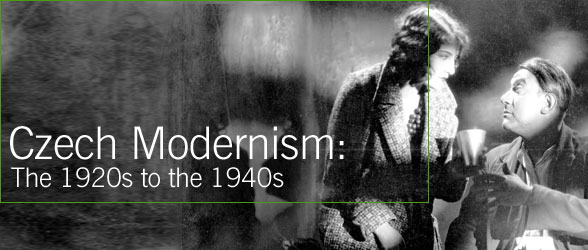
Czech (and Rusyn!) Modernism on Film

Hot on the heels of the Seventh Annual New Czech Films Festival earlier this month, BAM is running a second Czech film festival, this time focusing on Czech Modernism.

Twelve films are on the schedule, all dating from 1926-1949, when the Communists took over Czechoslovakia. Two highlights are the silent film The Kreuzer Sonata (Kreuzerova sonáta, 1926) and From Saturday to Sunday (Ze soboty na neděli, 1931).

Of particular interest to Carpatho-Rusyns is the first film ever to feature a Rusyn story with sound: Faithless Marijka (Marijka nevěrnice, also known in North America as The Forgotten Land, 1934) directed by Rusynophile Czech director and author Vladislav Vančura.

The film is based on a screenplay by Rusynophile Czech author Ivan Olbracht, with Karel Nový, and features a soundtrack by Bohuslav Martinů - himself a Slav of New York (Check out Unfaithful Marijka, An “Independent Film” – Martinu’s Contribution to the Czech Film Music .pdf, page 15-17).

Many of Olbrachts novels feature Rusyn themes and are set in Subcarpathia Rus, including Nikola Šuhaj loupežnik. Olbracht is also known for a series of journalistic reports on conditions in Subcarpathian Rus from the 1930s.

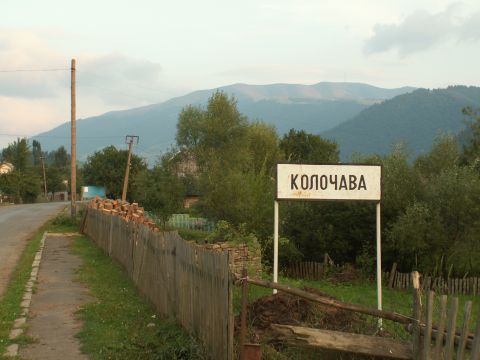
It was filmed in the Rusyn village of Kolochava (where there is a small museum dedicated to Olbracht) and all of the actors were locals speaking their own languages: Rusyn villagers speaking Rusyn, Jewish barkeeps and shopkeepers speaking Yiddish, police speaking in Czech. Marijka herself is played by a Rusyn girl, Hanna Shkelebei, from another Rusyn village, Vyshnii Bystryi.

The Village Voice review of the festival,
Czech, Please, unfortunately uses the outdated “Ruthenians” to refer to the Rusyns but otherwise features Faithless Marijka prominently. J. Hoberman writes: “The movie is a tale of backward development and backwoods passion but, despite a few awkwardly interpolated studio shots, its stark premise is secondary to an evocation of the wild Carpathian landscape.”

For more on Rusyn cinema and Rusyns in cinema, check out this entry from the
Encyclopedia of Rusyn History and Culture.

The festival runs through 11 December. Faithless Marijka screens on 10 December at 6:50 p.m.

Monday, August 21, 2006

Czechoslovak American Marionette Theatre: Once There Was A Village

Just a few days short of the first anniversary of the death of writer Yuri Kapralov, the Czechoslovak American Marionette Theatre will premier their adaption of his most famous work, Once There Was A Village at Lincoln Center.


The show, like Kapralov's bok, delves into the lives of immigrants in the East Village and Alphabet City in the 1960s and 1970s.

In addition to the puppets the show also includes dance and music provided by the

Performances will be tomorrow (22 August) at 6:00 p.m. and then again at 6:45 p.m. at the South Plaza at Lincoln Center. Both shows are free and no tickets are necessary.
Hungry March Band. Lincoln Center Out of Doors! commissioned the work, titled Once There Was a Village: A Panorama of East Village history. The full production will go up in the East Village at La MaMa next February.

Wednesday, August 16, 2006

Warhol's Factory going condo

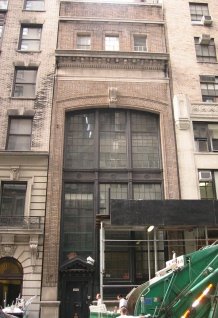
Yesterday’s news of Veselka’s anti-Rusyn gaffe reminded us that news broke recently that the final location of Andy Warhol’s Factory is about to go condo. Plans call for the four-story building to be converted into 22 stories with 50 luxury loft units.

The building, a former ConEd substation at 19 East 32nd Street, 158 Madison Avenue and 22 East 33rd Street, actually still bears a bit of Warhol-era graffiti reading “I never wanted to be a painter, I wanted to be a tap-dancer.” The graffiti is visible below a second-floor balcony in the 33rd street entrance lobby.

Back in March 1998, the New York Times profiled the building in “
Warhol's Old Factory: A Restaurant and Offices; 15 Minutes of Pasta?” when the condo plans were first floated. This time, though, it seems the plans will go forward.

Warhol bought the building in 1981 and turned it into the fourth location of The Factory. Upon his death in 1987, the building became the headquarters of
The Andy Warhol Foundation for the Visual Arts, which is now located on Bleecker Street. The first Factory was on the fifth floor of 231 East 47th Street from 1964-1968, then 33 Union Square West until 1974 when it moved to 860 Broadway and was rechristened The Office.

Check out Warhol condo coverage at Gothamist (
Clips from The Factory), Towleroad (Andy Warhol Factory Going Condo) and Triple Mint (Warhol Factory Condos)

(Photo: Triple Mint)