Saturday, January 09, 2010
Czechs and Slovaks in New York
Thursday, November 27, 2008
Slavs at the 1939 World's Fair in Queens
The other week, Slavs of New York was lucky enough to join the Municipal Arts Society’s walking tour of Bohemian National and the Sokol Halls, led by Joe Svehlak. Everyone is encouraged to visit Bohemian National Hall, but Sokol Hall is a bit less of a public space so getting inside was a treat.
Just inside the door is a small pub, and among the decorations are five large medallions – one each for Bohemia, Moravia, Silesia, Slovakia and Subcarpathian Rus (Ruthenia), the five parts of Czechoslovakia from 1918 to 1939. The guide said they were originally from the Czechoslovak pavilion from the 1939-1940 World’s Fair in Flushing Meadows, Queens.
So how was there a World’s Fair pavilion for a state that did not exist?
Turns out, the contract with the fair organizers was signed in 1938, and at the time of the Nazi invasion the following March the building was already about half-done. The plans were scaled down, but preparations went forward.
Mayor Fiorello La Guardia emerged as a leading proponent of Czechoslovak independence, quickly meeting with Czechoslovak representatives and assuring that so long as the United States did not recognize the German moves the Czechoslovak envoys would keep their titles and authority. When Nazi Germany (the only major country not participating in the fair) tried to keep the Czechoslovak pavilion from opening, La Guardia set up a “citizens’ committee” to raise funds to help complete the pavilion and its exhibits.The pavilion became a symbol of Czechoslovak resistance to Nazi domination. Former Czechoslovak president Edvard Benes spoke at the dedication of the pavilion on 31 May, highlighting the struggle of the Czechs, Slovaks and Carpatho-Russians (Rusyns) in Europe and thanking La Guardia, noting that “This pavilion, ladies and gentlemen, is the free and independent Czecho-Slovakia of the near past and the free and independent Czecho-Slovakia of the near future.”
The Czechoslovak pavilion stood between the pavilions of the Soviet Union and Japan. Here’s a description of the finished pavilion from the New York Times on 30 April 1939:The progress of the country during its twenty-year existence is the central theme, and the products and resources of the land and people are represented and demonstrated – such products as iron, steel, textiles, shoes, beer, hams, Glass blowing and etching are shown. A restaurant and open-air beer garden are included in the project.
Yugoslav pavilion featured a large, illuminated map of the country, as well as a model of the oldest pharmacy in the world, from Dubrovnik. Also highlighted were Yugoslavs who have made contributions to the United States, such as Nikola Tesla and Michael Pupin.Mayor La Guardia spoke in Croatian, a language he learnt while stationed in the United States Consular Service in Fiume (Rijeka), at the opening of the Yugoslav pavilion in May. Among his comments:
The people of Yugoslavia are generous, kindly and peace-loving. Whenever there is trouble in the Balkans, look for the reason, and it will be found to come from without and not from within. Let the strong and big nations leave the Balkans alone and peace will prevail there.
The
The Polish pavilion was built around the 348th anniversary of the first Polish Constitution, and included – among a wide variety of exhibits – the Jagellonian globe, which is believed to be the first to show the name “America.”
The Soviet Pavilion was universally acclaimed as a major highlight of the fair. The building was the tallest on the fairgrounds, other than the iconic Trylon structure. Estimates for its cost ranged from $4 to 6 million, by far the most of any World’s Fair structure. Among the materials used in its construction were nine different sorts of marble brought over specially from the USSR.The building was topped by a 79-foot-tall worker holding aloft an illuminated red star, nick named Big Joe. After complaints, Fair officials had to put a US flag atop the Parachute Jump (which was later relocated to Coney Island) to ensure it flew higher than the Soviet star.
Exhibits inside included a map of the Soviet Union covered in precious stones, two cinemas, a restaurant, and even a full-scale replica of a portion of Moscow’s Mayakovsky metro station (the station was brand new, having just been completed in 1938).
At the end of the 1939 season, the Soviet Union pulled out of the fair, and its building was taken apart and shipped back to Moscow. Initially, there were plans to reassemble the pavilion at Gorky Park in Moscow, but this was never done and the final fate of Big Joe and the rest of the exhibits remain a mystery.
Sunday, November 02, 2008
Bohemian National Hall Grand Opening!
As of last night, the Czech Consulate General and the Czech Center have moved into the building, from their landmark building at 1109 Madison Avenue. The exhibition space there is intended to remain open to the public as an annex to the Czech Center.
Beyond all this, the building also features a small cinema, a major ballroom and a roof terrace. A bid has recently been put out for a restaurant planned for the first floor, which is expected to be open soon.
On Sunday, 16 November, the Municipal Arts Society is organizing a walking tour that will take in not only Bohemian National Hall but also nearby Sokol Hall (420 East 71st Street between First Avenue and York), led by Joe Svehlak, a Czech-American urban historian. The tour meets at 11:00 a.m. at the southeast corner of First Avenue and 71st Street, and costs $15.00.
Sunday, August 10, 2008
Walking Tour: The East Village
Start at Union Square, and walk east along the northern side of 14th Street. You will soon hit a small shop, Russian Souvenirs (227 14th Street), between Second and Third Avenues. The shop has seemingly been there forever, and is a great place for traditional Russian arts and crafts, and Soviet kitsch.
Once you hit Second Avenue, you can walk north one block to Stuyvesant Square (not really part of the East Village, but close enough), where you will find the Byzantine (Ruthenian) Catholic church of St. Mary (246 East 15th Street), dating from 1964.Leaving Stuyvesant Square, the Slavic heart of the East Village unfolds southward down Second Avenue. On the west side of the street, you pass the Ukrainian Orthodox Federal Credit Union (215 Second Avenue) and then the Ukrainian Congress Committee of America (203 Second Avenue), and across Second Avenue on the east side are the diner Little Poland (200 Second Avenue), and the Jozef Pilsudski Institute of America in the Polish National Home (180 Second Avenue).
One of the most important blocks for our purposes is Second Avenue between St. Mark’s Place and 9th Street. On the northeast corner you’ll find the popular Ukrainian diner Veselka Restaurant (144 Second Avenue), and right next door is the Ukrainian National Home (142 Second Avenue). Though there are no windows, the food inside is top notch. Also in the building are the Karpaty Pub, and Lys Mykyta bar.A couple doors down is a building with an impressive medallion of Ukrainian national poet Taras Shevchenko but no other signage (136 Second Avenue). Inside are the Dibrova Social Club (CYM) and the Ukrainian Free University Foundation Inc. Across the street you’ll find the last of the great Slavic meat markets, Baczynsky’s (139 Second Avenue, note that it is closed until September 2008).
One more block down, you’ll see the small Polish diner Stage Restaurant (128 Second Avenue), and a few doors down the Ukrainian Sports Club (122 Second Avenue).
From here, cross Second Avenue and continue west along East 7th Street to find the cultural center of the local Ukrainian Community. The landmark St. George Ukrainian Catholic Church (30 East 7th Street) dates from 1977, but a much older structure, St. George Ruthenian Catholic Church, once stood on the same spot. On the north side of the street is the excellent Surma Book & Music Store (11 East 7th Street), well worth a visit.
Now walk back out to Second Avenue, cross to the east side of the street and walk north a few doors. You’ll see a building with a Cyrillic inscription that is the Self Reliance Federal Credit Union (108 Second Avenue). Turn onto 7th Street and walk east towards First Avenue.A newcomer to the Slavic world of the East Village is the Polish-themed bar Klimat (77 East 7th Street), with a wide selection of beer and wine from Slavic countries, as well as traditional Polish food. Next door is the stalwart Ukrainian bar Blue and Gold (79 East 7th Street). If you’re interested, you can continue along 7th Street and pick up the Slavs of New York Walking Tour of Alphabet City to venture further.
Around the corner is the Slovenian parish of St. Cyril (62 St. Mark's Place), a reminder that the East Village historically was much more than Ukrainians, Rusyns and Poles. Earlier times also saw vibrant Bulgarian, Czech, Slovak, and, yes, Slovene communities (among others).
Walk back to Second Avenue and continue south. An interesting sight is KGB Bar (85 East 4th Street), just around the corner. The building in a previous life was the home to the Ukrainian Communist Party in the United States, but today is home not only to the bar but also the Kraine Theatre.
Further down Second Avenue is the Russian Anyway Cafe (34 East 2nd Street), and between First and Second Avenues is the Orthodox Cathedral of the Holy Virgin Protection (59 East 2nd Street). Formerly a Russian-oriented parish, the church today takes in a wider audience. The building was originally the Mt. Olivet Memorial Church, and became an Orthodox church in 1943.Continuing along East 2nd Street and crossing First Avenue you’ll find the small shop Arka - Ukrainian Arts (26 First Avenue). The store keeps somewhat irregular hours – right now, they’re open from 10:00 a.m. to 5:00 p.m. on Tuesdays, Thursdays and Fridays.
And finally, if you’re feeling adventurous, walk down Houston and you’ll find the apartment complex Red Square (250 East Houston Street) between Avenues A and B. On the roof is a statue of Lenin rescued from the last days of the Soviet Union.
For some good background on the Ukrainians of the East Village, check out "Ukrainian East Village: A Shortened Oral History of an Immigrant Neighborhood” from the New York Press back in 2001. And for something a bit more substantial, taking in Ukrainians, Poles, Russians and Carpatho-Rusyns (Carpatho-Russians), try Yuri Kapralov’s Once There Was a Village, documenting the author’s time in the neighborhood in the late 1970s.
Sunday, July 06, 2008
Walking Tour: Czech and Slovak Yorkville
The golden age of the Czechs and Slovaks in Yorkville faded in the 1930s, as more and more moved to the suburbs. Even as late as the 1990s, a number of Czech bars, restaurants and shops could be found along First Avenue between 73rd and 74th Street, but little has survived. What remains, however, are a number of monumental buildings well worth a look .
Start at the southern edge of Slavic Yorkville, at the Slovak Catholic Church of St. John Nepomucene (#1., 411 East 66th Street at First Avenue). The parish was founded by Slovak immigrants, and began at St. Bridget on Tompkins Square Park around 1891. By 1895, the parish had raised enough funds to build its own church, St. John Nepomucene on East 4th Street.
Nearby is one of the few remaining Czech or Slovak owned businesses the area, Krtil Funeral Home (#2, 1270 First Avenue at 70th Street), opened in 1885.
Jan Hus Presbyterian Church (#4., 347 East 74th Street between First and Second Avenues), founded in 1885 by Czech Protestants. The church is home to the Neighborhood House, formerly a social center for local Czechs and today a social center for the entire neighborhood, Czech or otherwise.
Perhaps the most significant building remaining in the area – and a beacon for the future of Czech and Slovak Yorkville – is the Bohemian National Hall (#5., 321 East 73rd Street between First and Second Avenues), currently being renovated and completely disguised by scaffolding.

The hall was built between 1895 and 1897 as ground zero for Czech and Slovak community life in Yorkville. Designed by architect William C. Frohne, the building replaced the original Bohemian National Hall in the East Village, at 533 East 5th Street. (Not much is known about Frohne, but he did design the spectacular German Shooting Club at 12 St. Mark’s Place in 1888). Though the building remained in Czech hands, as the community began its exodus to the suburbs more and more of it was rented out to others and by 1986 the city had declared it unfit for occupancy.
The Czech government stepped in to rescue the building, and results are already being seen. The façade has already been completed (though is currently hidden under scaffolding), by Czech-American architect Jan Hird Pokorny. The third floor performance space is also completed, and is periodically used for events (watch the Czech Center website for announcements). More renovations are underway by another Czech-American architect, Martin Holub.
When complete, the Bohemian National Hall will be home to the Consulate General of the Czech Republic, the Czech Center and the Bohemian Benevolent & Literary Association, as well as a Dvorak Room, a restaurant and performance and events spaces.
The tour of Yorkville essentially ends here, though there are a few other places nearby that could be included: the Czech furniture design shop Atelier of Prague (970 Lexington Avenue between 70th and 71st Street) is just on the western edge of the old neighborhood, and the current center of Czech life in Manhattan, the Czech Center (1109 Madison Avenue at 83rd Street) is a short walk to the northwest.
Any Czech tour of New York, however, must end across the river from Yorkville, in Astoria at the landmark beer hall and community center Bohemian Hall (29-19 24th Avenue). As the Czech and Slovak community began migrating from Yorkville to the suburbs, Astoria was the first stop thanks to the ferry that used to run from a pier at East 72nd Street across to another at the end of Astoria Boulevard before the Queensboro bridge went up. Today, you have to take a taxi or a bus or subway, but it’s a perfect end to a day exploring Czech and Slovak New York City.
Monday, March 03, 2008
Forum of Slavic Cultures finally online!

The Forum's members are: Belarus, Bosnia and Herzegovina, Bulgaria, Croatia, Macedonia, Montenegro, Poland, the Russian Federation, Serbia, Slovakia, Slovenia and Ukraine, with The Czech Republic as an observer status. Attention is also paid to Slavic minorities in non-Slavic countries, including the Lusatian Sorbs in Germany.Monday, October 08, 2007
Czechoslovak Independence Day Weekend
Once again, Sunday’s City Section of the New York Times featured a bit of Slavic New York – Bohemian Hall and Beer Garden in Astoria (Joseph V. Tirella’s Welcome. But Don’t Call Them German). Last week, the Times featured the perseverance of a group of Ukrainian women in the East Village struggling to keep their luncheonette going. Formerly home to significant communities of Poles, Ukrainians and Carpatho-Rusyns, the East Village in recent years has been shedding more and more of its Slavic character.
In Astoria, however, the problem is similar but very different. Bohemian Hall is one of the city’s oldest and most impressive Slavic sites, but is lately becoming a victim of its own success. As the beer hall gets more and more popular among New Yorkers at large, few are aware of its Czech (and Slovak) character. Many, such as one of the people quoted in the article, are under the impression that if it is a beer hall, it must be German.
Bohemian Hall is full of Czech and Czechoslovak memorabilia, Czech beers, Czech food, and a large Czech flag flies above the front door. If people are not aware of its role in the local Czech and Slovak communities, it is not for lack of trying.
The management is trying to play up its pedigree by hosting cultural events – this summer’s Czech film series, for example. Some, though think it won’t matter and the public will continue to overlook Bohemian Hall’s Czech and Slovak character. One Czech patron concluded, “They don’t know because they don’t care.”
Meanwhile, Saturday was the annual Czech Street Festival on 83rd Street between Park and Madison. The festival celebrates the independence of Czechoslovakia in 1918, and even though it is primarily a Czech event today, it also features New York’s Slovak and Carpatho-Rusyn communities who also made up Czechoslovakia at that time.
Erik Sunguryan sent some photos from the event:


Thursday, November 30, 2006
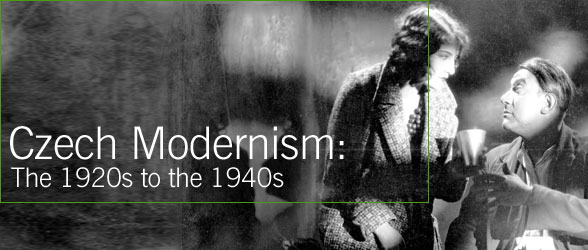
Czech (and Rusyn!) Modernism on Film
Hot on the heels of the
Seventh Annual New Czech Films Festival earlier this month, BAM is running a second Czech film festival, this time focusing on Czech Modernism.Twelve films are on the schedule, all dating from 1926-1949, when the Communists took over Czechoslovakia. Two highlights are the silent film The Kreuzer Sonata (Kreuzerova sonáta, 1926) and From Saturday to Sunday (Ze soboty na neděli, 1931).
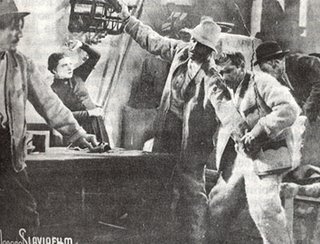
Of particular interest to Carpatho-Rusyns is the first film ever to feature a Rusyn story with sound: Faithless Marijka (Marijka nevěrnice, also known in North America as The Forgotten Land, 1934) directed by Rusynophile Czech director and author Vladislav Vančura.The film is based on a screenplay by Rusynophile Czech author Ivan Olbracht, with Karel Nový, and features a soundtrack by Bohuslav Martinů - himself a Slav of New York (Check out Unfaithful Marijka, An “Independent Film” – Martinu’s Contribution to the Czech Film Music .pdf, page 15-17).
Many of Olbrachts novels feature Rusyn themes and are set in Subcarpathia Rus, including Nikola Šuhaj loupežnik. Olbracht is also known for a series of journalistic reports on conditions in Subcarpathian Rus from the 1930s.
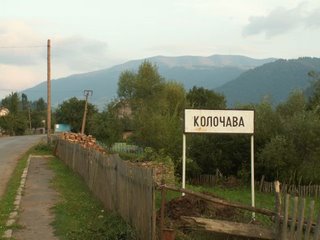
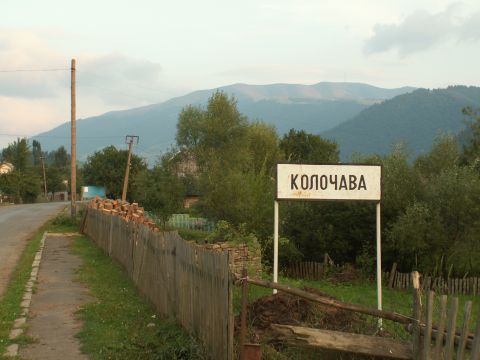
It was filmed in the Rusyn village of Kolochava (where there is a small museum dedicated to Olbracht) and all of the actors were locals speaking their own languages: Rusyn villagers speaking Rusyn, Jewish barkeeps and shopkeepers speaking Yiddish, police speaking in Czech. Marijka herself is played by a Rusyn girl, Hanna Shkelebei, from another Rusyn village, Vyshnii Bystryi.
The Village Voice review of the festival, Czech, Please, unfortunately uses the outdated “Ruthenians” to refer to the Rusyns but otherwise features Faithless Marijka prominently. J. Hoberman writes: “The movie is a tale of backward development and backwoods passion but, despite a few awkwardly interpolated studio shots, its stark premise is secondary to an evocation of the wild Carpathian landscape.”
For more on Rusyn cinema and Rusyns in cinema, check out this entry from the Encyclopedia of Rusyn History and Culture.
The festival runs through 11 December. Faithless Marijka screens on 10 December at 6:50 p.m.
Monday, August 21, 2006
Czechoslovak American Marionette Theatre: Once There Was A Village
Just a few days short of the first anniversary of the death of writer Yuri Kapralov, the Czechoslovak American Marionette Theatre will premier their adaption of his most famous work, Once There Was A Village at Lincoln Center. The show, like Kapralov's bok, delves into the lives of immigrants in the East Village and Alphabet City in the 1960s and 1970s.
In addition to the puppets the show also includes dance and music provided by the
Performances will be tomorrow (22 August) at 6:00 p.m. and then again at 6:45 p.m. at the South Plaza at Lincoln Center. Both shows are free and no tickets are necessary.
Hungry March Band. Lincoln Center Out of Doors! commissioned the work, titled Once There Was a Village: A Panorama of East Village history. The full production will go up in the East Village at La MaMa next February.