Saturday, January 09, 2010
Czechs and Slovaks in New York
Thursday, November 27, 2008
Slavs at the 1939 World's Fair in Queens
The other week, Slavs of New York was lucky enough to join the Municipal Arts Society’s walking tour of Bohemian National and the Sokol Halls, led by Joe Svehlak. Everyone is encouraged to visit Bohemian National Hall, but Sokol Hall is a bit less of a public space so getting inside was a treat.
Just inside the door is a small pub, and among the decorations are five large medallions – one each for Bohemia, Moravia, Silesia, Slovakia and Subcarpathian Rus (Ruthenia), the five parts of Czechoslovakia from 1918 to 1939. The guide said they were originally from the Czechoslovak pavilion from the 1939-1940 World’s Fair in Flushing Meadows, Queens.
So how was there a World’s Fair pavilion for a state that did not exist?
Turns out, the contract with the fair organizers was signed in 1938, and at the time of the Nazi invasion the following March the building was already about half-done. The plans were scaled down, but preparations went forward.
Mayor Fiorello La Guardia emerged as a leading proponent of Czechoslovak independence, quickly meeting with Czechoslovak representatives and assuring that so long as the United States did not recognize the German moves the Czechoslovak envoys would keep their titles and authority. When Nazi Germany (the only major country not participating in the fair) tried to keep the Czechoslovak pavilion from opening, La Guardia set up a “citizens’ committee” to raise funds to help complete the pavilion and its exhibits.The pavilion became a symbol of Czechoslovak resistance to Nazi domination. Former Czechoslovak president Edvard Benes spoke at the dedication of the pavilion on 31 May, highlighting the struggle of the Czechs, Slovaks and Carpatho-Russians (Rusyns) in Europe and thanking La Guardia, noting that “This pavilion, ladies and gentlemen, is the free and independent Czecho-Slovakia of the near past and the free and independent Czecho-Slovakia of the near future.”
The Czechoslovak pavilion stood between the pavilions of the Soviet Union and Japan. Here’s a description of the finished pavilion from the New York Times on 30 April 1939:The progress of the country during its twenty-year existence is the central theme, and the products and resources of the land and people are represented and demonstrated – such products as iron, steel, textiles, shoes, beer, hams, Glass blowing and etching are shown. A restaurant and open-air beer garden are included in the project.
Yugoslav pavilion featured a large, illuminated map of the country, as well as a model of the oldest pharmacy in the world, from Dubrovnik. Also highlighted were Yugoslavs who have made contributions to the United States, such as Nikola Tesla and Michael Pupin.Mayor La Guardia spoke in Croatian, a language he learnt while stationed in the United States Consular Service in Fiume (Rijeka), at the opening of the Yugoslav pavilion in May. Among his comments:
The people of Yugoslavia are generous, kindly and peace-loving. Whenever there is trouble in the Balkans, look for the reason, and it will be found to come from without and not from within. Let the strong and big nations leave the Balkans alone and peace will prevail there.
The
The Polish pavilion was built around the 348th anniversary of the first Polish Constitution, and included – among a wide variety of exhibits – the Jagellonian globe, which is believed to be the first to show the name “America.”
The Soviet Pavilion was universally acclaimed as a major highlight of the fair. The building was the tallest on the fairgrounds, other than the iconic Trylon structure. Estimates for its cost ranged from $4 to 6 million, by far the most of any World’s Fair structure. Among the materials used in its construction were nine different sorts of marble brought over specially from the USSR.The building was topped by a 79-foot-tall worker holding aloft an illuminated red star, nick named Big Joe. After complaints, Fair officials had to put a US flag atop the Parachute Jump (which was later relocated to Coney Island) to ensure it flew higher than the Soviet star.
Exhibits inside included a map of the Soviet Union covered in precious stones, two cinemas, a restaurant, and even a full-scale replica of a portion of Moscow’s Mayakovsky metro station (the station was brand new, having just been completed in 1938).
At the end of the 1939 season, the Soviet Union pulled out of the fair, and its building was taken apart and shipped back to Moscow. Initially, there were plans to reassemble the pavilion at Gorky Park in Moscow, but this was never done and the final fate of Big Joe and the rest of the exhibits remain a mystery.
Sunday, November 02, 2008
Bohemian National Hall Grand Opening!
As of last night, the Czech Consulate General and the Czech Center have moved into the building, from their landmark building at 1109 Madison Avenue. The exhibition space there is intended to remain open to the public as an annex to the Czech Center.
Beyond all this, the building also features a small cinema, a major ballroom and a roof terrace. A bid has recently been put out for a restaurant planned for the first floor, which is expected to be open soon.
On Sunday, 16 November, the Municipal Arts Society is organizing a walking tour that will take in not only Bohemian National Hall but also nearby Sokol Hall (420 East 71st Street between First Avenue and York), led by Joe Svehlak, a Czech-American urban historian. The tour meets at 11:00 a.m. at the southeast corner of First Avenue and 71st Street, and costs $15.00.
Sunday, July 06, 2008
Walking Tour: Czech and Slovak Yorkville
The golden age of the Czechs and Slovaks in Yorkville faded in the 1930s, as more and more moved to the suburbs. Even as late as the 1990s, a number of Czech bars, restaurants and shops could be found along First Avenue between 73rd and 74th Street, but little has survived. What remains, however, are a number of monumental buildings well worth a look .
Start at the southern edge of Slavic Yorkville, at the Slovak Catholic Church of St. John Nepomucene (#1., 411 East 66th Street at First Avenue). The parish was founded by Slovak immigrants, and began at St. Bridget on Tompkins Square Park around 1891. By 1895, the parish had raised enough funds to build its own church, St. John Nepomucene on East 4th Street.
Nearby is one of the few remaining Czech or Slovak owned businesses the area, Krtil Funeral Home (#2, 1270 First Avenue at 70th Street), opened in 1885.
Jan Hus Presbyterian Church (#4., 347 East 74th Street between First and Second Avenues), founded in 1885 by Czech Protestants. The church is home to the Neighborhood House, formerly a social center for local Czechs and today a social center for the entire neighborhood, Czech or otherwise.
Perhaps the most significant building remaining in the area – and a beacon for the future of Czech and Slovak Yorkville – is the Bohemian National Hall (#5., 321 East 73rd Street between First and Second Avenues), currently being renovated and completely disguised by scaffolding.

The hall was built between 1895 and 1897 as ground zero for Czech and Slovak community life in Yorkville. Designed by architect William C. Frohne, the building replaced the original Bohemian National Hall in the East Village, at 533 East 5th Street. (Not much is known about Frohne, but he did design the spectacular German Shooting Club at 12 St. Mark’s Place in 1888). Though the building remained in Czech hands, as the community began its exodus to the suburbs more and more of it was rented out to others and by 1986 the city had declared it unfit for occupancy.
The Czech government stepped in to rescue the building, and results are already being seen. The façade has already been completed (though is currently hidden under scaffolding), by Czech-American architect Jan Hird Pokorny. The third floor performance space is also completed, and is periodically used for events (watch the Czech Center website for announcements). More renovations are underway by another Czech-American architect, Martin Holub.
When complete, the Bohemian National Hall will be home to the Consulate General of the Czech Republic, the Czech Center and the Bohemian Benevolent & Literary Association, as well as a Dvorak Room, a restaurant and performance and events spaces.
The tour of Yorkville essentially ends here, though there are a few other places nearby that could be included: the Czech furniture design shop Atelier of Prague (970 Lexington Avenue between 70th and 71st Street) is just on the western edge of the old neighborhood, and the current center of Czech life in Manhattan, the Czech Center (1109 Madison Avenue at 83rd Street) is a short walk to the northwest.
Any Czech tour of New York, however, must end across the river from Yorkville, in Astoria at the landmark beer hall and community center Bohemian Hall (29-19 24th Avenue). As the Czech and Slovak community began migrating from Yorkville to the suburbs, Astoria was the first stop thanks to the ferry that used to run from a pier at East 72nd Street across to another at the end of Astoria Boulevard before the Queensboro bridge went up. Today, you have to take a taxi or a bus or subway, but it’s a perfect end to a day exploring Czech and Slovak New York City.
Monday, March 03, 2008
Forum of Slavic Cultures finally online!

The Forum's members are: Belarus, Bosnia and Herzegovina, Bulgaria, Croatia, Macedonia, Montenegro, Poland, the Russian Federation, Serbia, Slovakia, Slovenia and Ukraine, with The Czech Republic as an observer status. Attention is also paid to Slavic minorities in non-Slavic countries, including the Lusatian Sorbs in Germany.Monday, October 08, 2007
Czechoslovak Independence Day Weekend
Once again, Sunday’s City Section of the New York Times featured a bit of Slavic New York – Bohemian Hall and Beer Garden in Astoria (Joseph V. Tirella’s Welcome. But Don’t Call Them German). Last week, the Times featured the perseverance of a group of Ukrainian women in the East Village struggling to keep their luncheonette going. Formerly home to significant communities of Poles, Ukrainians and Carpatho-Rusyns, the East Village in recent years has been shedding more and more of its Slavic character.
In Astoria, however, the problem is similar but very different. Bohemian Hall is one of the city’s oldest and most impressive Slavic sites, but is lately becoming a victim of its own success. As the beer hall gets more and more popular among New Yorkers at large, few are aware of its Czech (and Slovak) character. Many, such as one of the people quoted in the article, are under the impression that if it is a beer hall, it must be German.
Bohemian Hall is full of Czech and Czechoslovak memorabilia, Czech beers, Czech food, and a large Czech flag flies above the front door. If people are not aware of its role in the local Czech and Slovak communities, it is not for lack of trying.
The management is trying to play up its pedigree by hosting cultural events – this summer’s Czech film series, for example. Some, though think it won’t matter and the public will continue to overlook Bohemian Hall’s Czech and Slovak character. One Czech patron concluded, “They don’t know because they don’t care.”
Meanwhile, Saturday was the annual Czech Street Festival on 83rd Street between Park and Madison. The festival celebrates the independence of Czechoslovakia in 1918, and even though it is primarily a Czech event today, it also features New York’s Slovak and Carpatho-Rusyn communities who also made up Czechoslovakia at that time.
Erik Sunguryan sent some photos from the event:


Wednesday, January 25, 2006
Slovaks in New York City
Slovaks first arrived in New York around 1848 and settled primarily in the East Village in Manhattan around 14th Street and Second Avenue, according to the Encyclopedia of New York City. By the 1880s, they had followed the Central European migration from downtown to Yorkville, in the East 70s and 80s between York and Third Avenues, as well as other neighorhoods such as Long Island City, Astoria and Sunnyside in Queens, and in Greenpoint in Brooklyn. By 1910, there were over 10,000 Slovaks in the five boroughs, and even more came after the formation of Czechoslovakia in 1918. There were about 85,000 in the late 1970s, accounting for more than one percent of the total population.
In 1883, the community founded its first organization, Živena, which merged shortly thereafter into the St. John the Baptist Society. By the early 1890s, a number of organizations serving the Slovak community had formed. Robust community activity continues into the present day, thanks in no small part to the Slovak American Cultural Center, founded in 1968.Also in 1883, the community founded its first parish, St. Elian Greek Cathlic Church (including - if not primarily - Carpatho-Rusyns from eastern Slovakia). Slovak Roman Catholic parishes followed in quick succession: St. Elizabeth of Hungary in 1891 in Yorkville, St. John Nepomucene in 1895 on the Upper East Side and the Church of the Holy Family in 1895 in East Midtown. All three also include Czechs in their congregations, among other ethnic groups. Protestant Slovaks formed Holy Trinity Evangelical Lutheran Church in lower Manhattan in 1902.
During the late 1890s, the golden age of Slovak life in New York, the community was also served by several newspapers, including Slovak v Amerike (since 1889), Newyorský denník (New York Daily, 1895-1974), and Slobodný orol (The Free Eagle, 1900-4).
Today, Slovak life is most vibrant in its churches, and helped along by the Slovak American Cultural Center. On the internet, they also make use of Slovak Info for local events listings. There is also at least one Slovak restaurant in the City, Milan's in Sunset Park.
Monday, December 19, 2005
Astoria's Bohemian Hall
Back in 2000, the New York Times profiled Bohemian Hall in A Beer Garden in Astoria Shelters a Lost Era. The building features New York's last remaining beer garden, "a grove of about 20 old trees -- maples, sycamores and lindens -- enclosed by a high wall" with "the sheltering feel of an ancient European village, where the townspeople gather for beer and gossip."
Bohemian Hall was built in 1930 as a cultural and community center for local Czechs. They mostly lived in Yorkville in Manhattan at that time, but built the hall in Astoria because there they were able to build big.
The beer garden might be out of season, but Bohemian Hall is hosting a New Year's Eve celebration, with an all-night buffet, open bar and live entertainment. The event runs from 8:00 p.m. to 4:00 a.m. and tickets cost $65.00. Call 718-274-4925 for more information.
Friday, December 16, 2005
ESB Staircase Race: Czechoslovakia v Poland
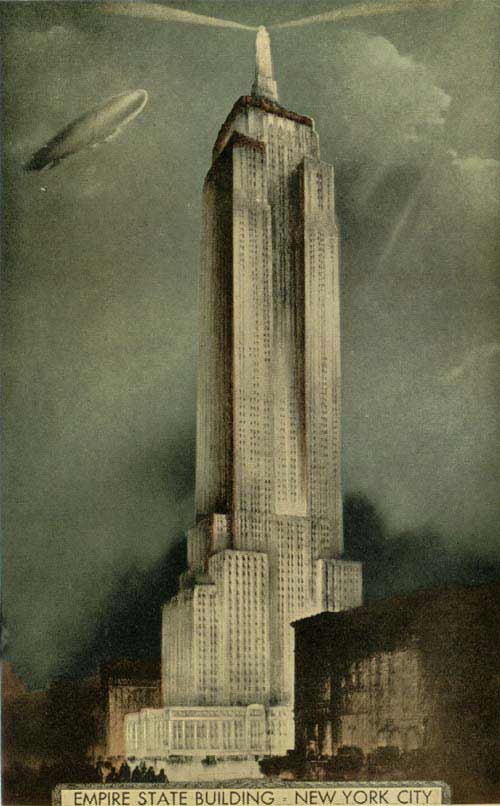
One of the myriad full-text books available via Google book search is Stuart Goldenberg’s Only in New York: 400 Remarkable Answers to Intriguing, Provocative Questions about New York City, a collection of the author’s answers to readers’ questions about the city published in the New York Times. Of particular interest to Slavs of New York is page 178, where we find the question “Is it true that Olympic skiers once trained by climbing the stairs of the Empire State Building?”
The answer?
Apparently, the Polish ski team made it from the fifth floor all the way up to the 102nd in just 21 minutes back in 1932 as part of their training for the Olympic 50km cross-country race in Lake Placid.
Once they got there, however, they were greeted by the Czechoslovak team (who beat them by taking the elevator). The Czechoslovak team then challenged the Poles to a race up the stairs, but the 17 February 1932 edition of the Times reports that the building management was "not agreeable on the proposal to use the staircase for international sports."
(Photo: Empire State Building from New York Architecture Images)
Tuesday, August 16, 2005
Slavic sculpture in Manhattan
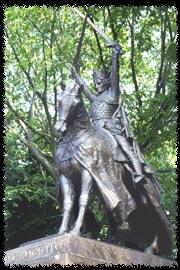
Manhattan is home to several public sculptures and monuments featuring a variety of important Slavs. One of the easiest to find is the statue of King Ladislas Jagiello of Poland, located at the east shore of Turtle Pond in Central Park near 80th Street. The statue is the work of S.K. Ostrowski and originally featured into the Polish pavilion at the NYC World's Fair. It settled in the park in 1945.
At East 17th Street and N.D. Perlman Place on Stuyvesant Square, you'll also find a monument to Czech composer Anton Dvořák. This one is the work of Yugoslavia's most important sculptor, Ivan Meštrović. The sculpture came to New York more than thirty years ago, originally installed on the roof of Avery Fisher Hall at Lincoln Center.

Even though Dvořák's former home at 327 East 17th Street near Stuyvesant Square had been designated a landmark, the City Council overturned the designation in 1991 and the building was destroyed soon after. An AIDS hospice currently sits on the site. The statue was erected nearby in 1997.
Another public sculpture of interest is that of Vladimir Lenin that sits atop the Red Square building on East Houston Street.
The grounds of the United Nations, on the East Side, are a treasure trove of Slavic-related sculptures and monuments. Most visible is definitely the statue of St. George that sits on First Avenue near 48th Street. This statue, of the patron saint of Moscow, is the work of Zurab Tsereteli, a Georgian sculptor who completed several large-scale projects in Moscow in the 1990s.
Also on the grounds is "Peace," an equestrian statue by Croatian sculptor Antun Augustinčić, originally a gift to the organization from Yugoslavia. Nearby is a Soviet sculpture, "Let Us Beat Swords into Plowshares." It's also worth pointing out that aside from the statues the public can also see a copy of the Vace Situla from Slovenia and an enormous stained-glass window by Marc Chagal in the visitors lobby.
Unaccessible to the general public is a monument to Saints Cyril and Methodius, a gift of Slovakia. The monument sits just outside the delegates' entrace to the General Assembly building. Also unaccessible to the general public is a statue of Kopernicus from Poland, Croatia's Girl with lute by Ivan Meštrović and also a piece of a medieval fresco from Bulgaria.
(Photos from http://www.nycgovparks.org/)